Myanmar’s airport and air travel recovery in 2026 is unfolding in a global aviation cycle that is improving, but not evenly. IATA data cited in a 2026 industry roundup forecasts 5.2 billion passengers flying in 2026, compared with 4.5 billion in 2019. The same source highlights how the recovery has been “highly uneven,” with Asia Pacific still managing the after-effects of years of restricted cross-border travel. This global backdrop matters for Myanmar because route growth, aircraft availability, and airline economics shape what schedules return and how quickly connectivity can scale.
Tourism policy is also a direct lever for airport demand. Myanmar reported nearly 975,000 international visitors in 2025, and by May 31, 2026, it had received close to 450,000 foreign tourists, described as 5% growth. Officials have set a target of doubling tourist arrivals to 1.8 million in 2026, with a focus on nearby markets such as China and Thailand. In January to May, Chinese arrivals by air rose 12%, while visitors from Thailand increased 7% in the same period. Stakeholders also noted rising inquiries from Europe, the United States, and India, but pointed to limited international flight options.
What Visa Access and Regional Capacity Trends Mean for Airports
Visa access is being used to reduce friction for inbound travel, which can help airlines justify restoring flights. Myanmar has expanded visa-on-arrival for travellers from China, India, Japan, and South Korea, while citizens of Russia and most South-East Asian countries already have visa-free entry. Officials indicated further easing would depend on demand from individual markets. These steps aim to convert interest into actual arrivals, especially when flight options remain limited. For airports, the practical outcome is that demand growth depends not just on marketing targets, but also on predictable entry rules that support stable booking patterns.
Regional airline capacity in Southeast Asia provides context for how competitive the route environment can be around Myanmar’s gateways. OAG data for July 2026 shows Southeast Asian airline capacity down 1.2% overall year on year, driven primarily by low-cost carrier contraction. AirAsia reduced capacity by 644,300 seats (−21.9%), Lion Air by 594,500 seats (−20.9%), and Thai AirAsia by 416,500 seats (−22.3%). At the airport level, Singapore Changi led with 3.56 million seats (+0.1% vs July 2025), while Jakarta had 3.32 million seats (+3.2%) and Kuala Lumpur 3.15 million (−4.4%). These figures are not Myanmar-specific, but they frame the regional supply conditions that influence network decisions.
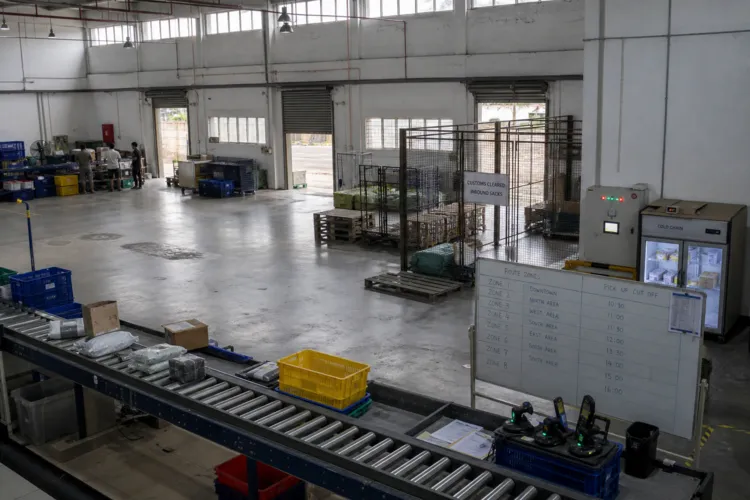
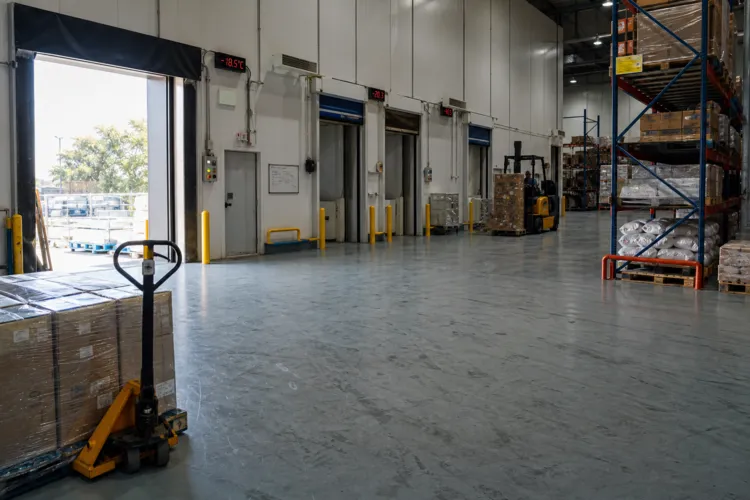
Freight dynamics add another layer to the Myanmar aviation market outlook, because airport recovery is not only about passengers. A Myanmar logistics forecast expects the country’s freight and logistics market to grow from USD 6.15 billion in 2025 to USD 6.35 billion in 2026, with a forecast of USD 7.43 billion by 2031 at a 3.21% CAGR over 2026–2031. Within that outlook, air freight forwarding is projected to register a 3.67% CAGR between 2026–2031, and air freight transport is expected to post the fastest growth within its segment at a 4.12% CAGR over 2026–2031. For airports, that implies recovery narratives can be supported by cargo alongside tourism-led passenger gains.
What is Myanmar targeting for tourist arrivals in 2026?
How did arrivals trend in early 2026 compared with 2025 levels?
Which inbound markets are leading Myanmar’s air arrivals in 2026?
How do regional airline capacity shifts affect Myanmar’s airport recovery?
What does the Myanmar aviation market outlook suggest about air cargo growth?