




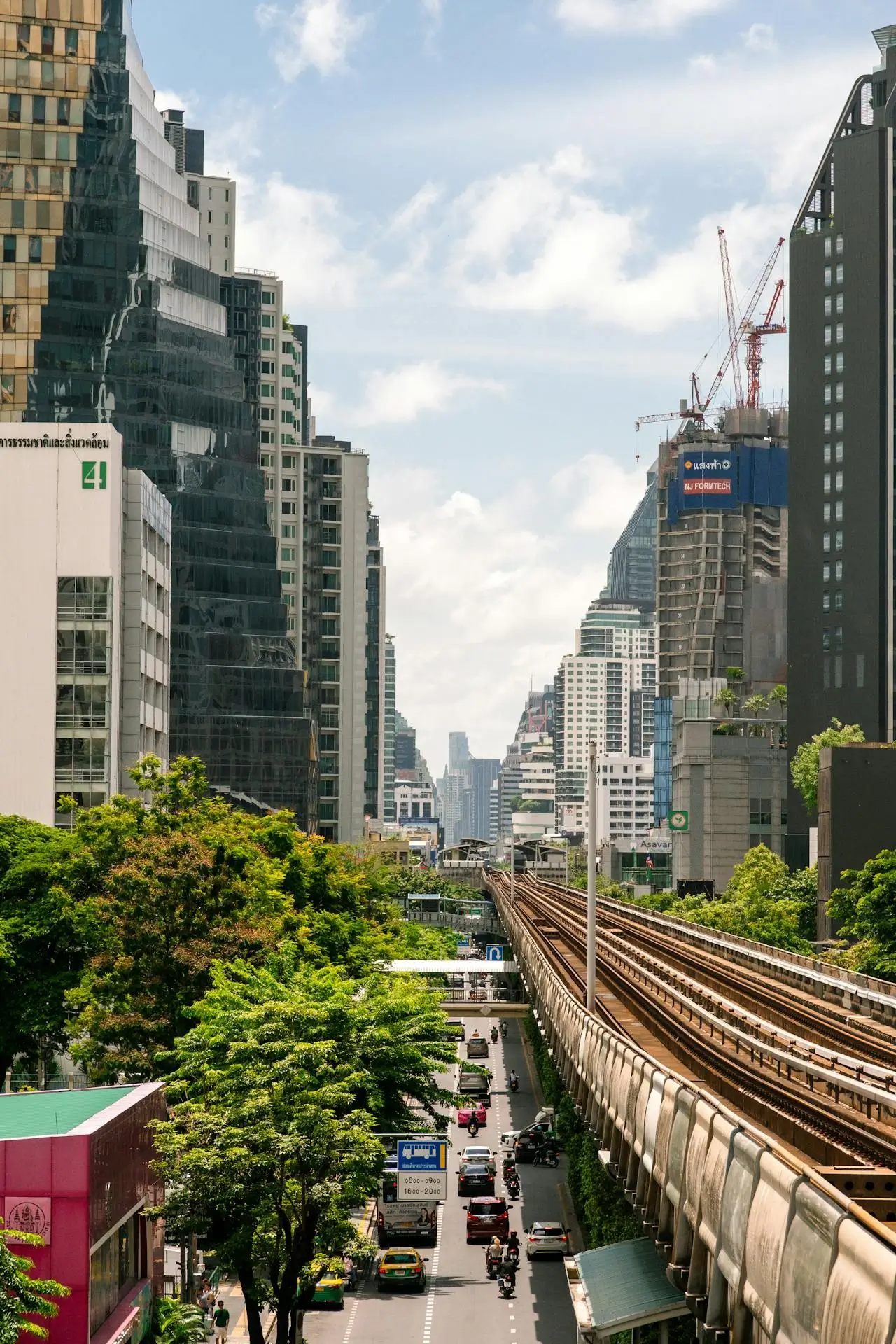
/ Overview
Our Market Research Approach in Myanmar
Our market research approach in Myanmar focuses on establishing what is commercially viable under the conditions businesses face on the ground. A five-stage methodology connects published market intelligence with customer interviews, competitive assessments, demand modelling, and practical recommendations. Each study is designed around a specific business question, with evidence gathered and tested before strategic options are evaluated.
Market access, purchasing power, infrastructure reliability, and distribution networks can vary considerably between Yangon, Mandalay, and other parts of the country. Published statistics may also offer an incomplete picture of current commercial activity. We examine local conditions, verify information through appropriate market participants, and account for operational uncertainty when assessing investment, expansion, or partnership decisions.
/ Our Method
Our Market Research Methodology in 5 Steps
Our research process follows five connected stages. Methods and data requirements are adjusted according to the project objectives, sector conditions, geographic accessibility, and level of commercial uncertainty involved.
-
Define the business decision
We identify the specific question management needs to resolve, whether assessing demand, reviewing an existing operation, entering a new region, or selecting local partners. Research objectives are translated into customer segments, geographic priorities, decision criteria, and an evidence-gathering plan.
Output: Research scope, objectives, and research plan.
-
Desk research
Available economic statistics, sector publications, trade information, regulatory documents, and company intelligence provide the starting point. We assess the recency and reliability of the evidence, identify conflicting figures, and determine which assumptions need validation through local research.
Output: Preliminary market assessment and research gaps.
-
Primary research & fieldwork
Interviews with customers, distributors, suppliers, business operators, and industry specialists help establish how markets function in practice. Depending on accessibility and project requirements, surveys, site observations, and commercial assessments are used to investigate customer needs and operating constraints.
Output: Primary research findings and market insights.
-
Market sizing & triangulation
Where appropriate, we develop top-down and bottom-up estimates using available industry indicators, addressable customer groups, purchasing activity, and pricing. Alternative sources and stakeholder evidence help test assumptions, particularly where formal market data is incomplete or inconsistent.
Output: Market sizing model, validated assumptions, and supporting analysis.
-
Recommendations & decision support
The evidence is translated into strategic options that consider commercial potential alongside affordability, operational feasibility, partner reliability, and implementation risks. Recommendations identify practical priorities, decisions requiring further validation, and the conditions necessary to move forward.
Output: Research report, strategic recommendations, and decision-support materials.
/ Data Sources
Which Data Sources Do We Use in Myanmar?
Reliable research in Myanmar requires careful interpretation of available statistics, institutional information, industry evidence, and direct market feedback. We examine the origin, reporting period, geographic coverage, and potential limitations of each source, using primary research to address gaps where published information does not fully reflect current market conditions.
| Source type | Examples | Research application |
|---|---|---|
| Official statistics | Central Statistical Organization (CSO), Myanmar Statistical Information Service (MMSIS), Central Bank of Myanmar (CBM) | Economic indicators, population, trade, monetary conditions, and sector activity |
| Ministries & regulators | Ministry of Commerce, Directorate of Investment and Company Administration (DICA), relevant sector authorities | Trade requirements, company registration, investment conditions, licensing, and regulatory considerations |
| Chambers & industry bodies | Union of Myanmar Federation of Chambers of Commerce and Industry (UMFCCI), relevant trade associations and professional organisations | Industry networks, business conditions, market participants, and potential partners |
| Industry & company data | Company disclosures, customs and trade information, sector publications, development institution reports, and commercial databases | Competitive landscape, market performance, distribution conditions, and industry benchmarks |
| Primary research | Customer interviews, supplier consultations, distributor assessments, business surveys, and site observations | Customer requirements, purchasing behaviour, pricing, and validation of secondary findings |
/ Fieldwork
How We Run Primary Research and Fieldwork in Myanmar
Primary research in Myanmar must reflect the practical realities of reaching respondents and interpreting market information. Depending on the location and industry, purchasing behaviour may be influenced by cash flow, product availability, trust in suppliers, transport accessibility, and service reliability. We select research methods that provide relevant evidence while accounting for local access and safety requirements.
Fieldwork may focus on Yangon, Mandalay, Naypyidaw, and selected commercial or regional markets where conditions permit. Research participants can include business owners, procurement managers, retailers, distributors, manufacturers, healthcare professionals, and consumers. Coverage is determined by respondent accessibility, project requirements, and the feasibility of conducting research safely.

Methods
Business interviews, customer surveys, distributor assessments, retail observations, site visits, and remote consultations when physical access is restricted.
Languages
Burmese and English, with relevant local-language support or interpretation arranged according to respondent needs and research locations.
Scheduling
Fieldwork planning considers public holidays, business availability, transport conditions, communications reliability, and changes in regional accessibility.
Respondent recruitment
Participants are identified through business mapping, professional networks, industry contacts, and screening criteria, with recruitment adapted to local access and confidentiality requirements.
/ Market Sizing
How We Size and Validate a Market in Myanmar
Market sizing in Myanmar requires particular care where formal data is incomplete, reporting periods differ, or customer activity is difficult to measure. We combine available industry indicators with evidence from businesses, suppliers, and end users, then test the assumptions behind each calculation to establish a transparent market estimate.
Top-down
Start with sector activity, estimated expenditure, trade information, and available market statistics, then narrow the estimate to relevant services, customers, and accessible locations.
Triangulation
Check discrepancies against supplier interviews, customer activity, operating capacity, and market pricing, documenting limitations where information remains incomplete.
Bottom-up
Estimate demand using addressable business customers, service utilisation, annual purchasing volumes, and realised transaction values supported by primary evidence.
Market Sizing: Third-Party Cold Storage Services in Myanmar
Business question
What is the estimated annual market value of third-party refrigerated and frozen warehousing services for food and pharmaceutical distributors in Yangon and Mandalay?
Top-down estimate
US$28m
Estimated addressable temperature-controlled storage demand × third-party outsourcing and storage expenditure assumptions
Bottom-up estimate
US$24m
Available third-party storage capacity × average paid occupancy × annual realised storage fees
Triangulation
The estimates are compared against facility capacity, occupancy patterns, electricity and backup power requirements, storage tariffs, and customer outsourcing practices. Differences between Yangon and Mandalay are reviewed to distinguish current paid demand from potential unmet demand.
Estimated market range
US$24–28m
Decision implication: Evaluate warehouse expansion opportunities, prioritise customer segments, and assess potential returns from additional cold storage capacity.
/ By Decision
How the Method Changes by Business Decision
Business decisions in Myanmar require an understanding of market potential alongside the practical conditions for implementation. Our methodology changes according to whether a client needs to validate demand, improve an existing operation, assess an investment, or identify partners capable of supporting commercial activity.
| Your decision | Method mix | Deliverable | Service page |
|---|---|---|---|
| Is there sufficient demand in the target market? | Market sizing + customer interviews + demand validation | Market opportunity assessment | Market Research → |
| How should we prioritise growth opportunities? | Market scenario analysis + capability assessment + risk evaluation | Strategic growth roadmap | Strategic Planning → |
| What is a practical way to enter Myanmar? | Market accessibility review + customer segmentation + channel assessment | Phased market entry roadmap | Market Entry Strategy → |
| Is a potential acquisition commercially viable? | Commercial due diligence + market analysis + financial scenario assessment | Acquisition assessment | Mergers and Acquisitions → |
| Where are costs or supply chain weaknesses? | Value chain mapping + logistics review + supplier and cost benchmarking | Value chain improvement plan | Value Chain Analysis → |
| How does our offering compare with competitors? | Competitor profiling + pricing research + channel and service assessment | Competitive benchmark | Competitive Benchmarking → |
| Which local distributor or partner can we rely on? | Partner screening + distribution network mapping + capability interviews | Partner shortlist and channel strategy | Distribution & Strategic Partnership → |
| What influences purchasing and customer trust? | Customer segmentation + affordability research + purchasing behaviour interviews | Customer behaviour assessment | Consumer Behavior Analysis → |
/ By Sector
How the Method Changes by Sector
Myanmar’s industries face different demand patterns, infrastructure requirements, and commercial constraints. We adapt research methods to the evidence needed within each sector, accounting for customer affordability, local capacity, distribution, and implementation conditions.
Construction
Reconstruction and infrastructure demand analysis, contractor interviews, building materials research, supplier benchmarking, and project feasibility assessments.
View sector →Healthcare
Patient demand mapping, diagnostic capacity assessment, medical device procurement research, hospital benchmarking, and healthcare service accessibility analysis.
View sector →Energy
Commercial power demand assessment, distributed solar feasibility analysis, backup energy requirements, and customer investment capacity evaluation.
View sector →Supply Chain & Logistics
Distribution network mapping, warehouse capacity assessments, route cost analysis, and regional supply availability and service reliability reviews.
View sector →Transport & Mobility
Passenger demand studies, route profitability analysis, fleet utilisation benchmarking, transport accessibility research, and network optimisation.
View sector →/ Timelines
How Long Does Market Research in Myanmar Take?
A defined market research engagement in Myanmar may require 6–12 weeks, depending on available information, geographic access, respondent availability, and research complexity. Projects involving multiple regions, difficult-to-reach markets, or extensive primary research may require additional time or alternative research methods.
Project planning typically covers scoping, desk research, respondent recruitment, interviews or surveys, analytical validation, and final reporting. Geographic coverage and fieldwork schedules should remain flexible, with remote research considered where physical access is restricted or inappropriate.
| Project type | Typical duration | Typical team |
|---|---|---|
| Desk-led market assessment | 4–6 weeks | Project manager + research analysts |
| Interview-based market study | 6–10 weeks | Project manager + analysts + sector specialists |
| Large-scale survey / fieldwork | 10–16 weeks | Research team + fieldwork coordinators |
| Feasibility study | 8–14 weeks | Project manager + sector and financial specialists |
/ Method in Practice
How Our Research Methods Work in Practice
Healthcare
Expanding Diagnostic Services Through a Regional Laboratory Hub in Mandalay
Issue
A healthcare diagnostics provider considering expansion into central and upper Myanmar needed to improve access to laboratory services without committing to excessive upfront investment. Demand varied between locations, medical specialities, and referral networks. Establishing several fully equipped laboratories would require significant equipment, staffing, quality control, and maintenance expenditure, while sample transport remained an important operational challenge.
Approach
The research mapped hospitals, clinics, existing laboratories, and referral networks across Mandalay and surrounding markets. Interviews with healthcare professionals examined testing demand, referral behaviour, pricing expectations, and service quality requirements. We also assessed sample collection routes, handling procedures, turnaround times, and the competitive position of existing providers.
Recommendation
A hub-and-spoke model was recommended, with one processing laboratory in Mandalay supported by three collection centres rather than four fully equipped laboratories. The initial portfolio prioritised tests with consistent referral demand, while clinic partnerships and standardised sample handling procedures supported the proposed expansion.
Engagement ROI
The recommended structure reduced estimated initial investment by approximately one-third compared with the original expansion plan. It also improved projected equipment utilisation and provided a more scalable model for reaching additional markets. The client began partnership discussions with several clinics before committing to new facilities.
Energy
Identifying Commercial Solar Opportunities for Essential Businesses in Myanmar
Issue
A Southeast Asian distributed-energy provider wanted to evaluate commercial solar and battery storage opportunities in Myanmar. Electricity interruptions and reliance on diesel generators created potential demand, but customers differed in their energy consumption, financial capacity, and ability to support new investment. The company needed to identify commercially viable prospects rather than pursue broad market interest.
Approach
The engagement involved interviews with factory operators, private hospitals, cold-storage businesses, hotels, energy contractors, and commercial lenders. Energy consumption and generator costs were examined to estimate potential savings under alternative system configurations. The assessment also reviewed local engineering providers to understand installation, maintenance, and project-management capabilities.
Recommendation
We recommended targeting private healthcare facilities, food processors, cold-storage operators, and selected light manufacturers. Standardised system packages were proposed to simplify technical design and commercial proposals, alongside direct-purchase options and carefully qualified energy-service agreements.
Engagement ROI
The study helped the client concentrate its commercial resources on opportunities with stronger project economics. Two pilot sites advanced to technical assessment, while prospects with weak financial viability were removed from the pipeline. Standardised proposals also shortened the initial sales and evaluation process, providing clearer criteria for subsequent investment decisions.
Transport & Mobility
Improving Passenger Demand and Fleet Utilisation on the Yangon–Mandalay Network
Issue
A private intercity transport operator serving Yangon, Mandalay, and selected regional destinations needed to improve route profitability without reducing access to important markets. Passenger demand differed significantly between routes, departure times, and travel days. Some vehicles operated below viable capacity, while popular departures experienced insufficient seating. Fleet allocation also relied heavily on historical scheduling practices.
Approach
The assessment reviewed ticketing data, fuel expenditure, vehicle maintenance, fleet capacity, and departure performance. Passenger interviews examined travel purposes, booking preferences, price sensitivity, and preferred schedules. Competitor fares and timetables were benchmarked, while terminal observations identified avoidable dispatch and boarding delays.
Recommendation
The proposed network redesign consolidated selected low-demand departures, adjusted vehicle allocation, and introduced coordinated connections through two regional hubs. Improvements to digital booking, passenger notifications, and route-level performance reporting were recommended. Changes were initially tested across three priority corridors.
Engagement ROI
The pilot increased average passenger load factors by 9 percentage points and reduced fuel cost per passenger by approximately 7%. More consistent dispatch procedures improved on-time departures, while revised capacity allocation helped preserve regional connectivity using the existing fleet more efficiently.
Want to know who we are? About Market Research Myanmar →
Frequently Asked Questions
-
We use top-down and bottom-up calculations based on available industry statistics, customer demand, purchasing activity, and pricing. Estimates are checked against local business interviews and operational evidence, with assumptions and data limitations documented where market information is incomplete.
-
Our research draws on the Central Statistical Organization, relevant government publications, trade information, company disclosures, industry reports, and primary research. Sources are evaluated for reliability and recency, particularly when published figures do not fully reflect current commercial conditions.
-
We examine competitor offerings, pricing, distribution coverage, product availability, and service capabilities. Customer interviews, distributor feedback, and market observations help identify competitive differences and assess how local businesses position themselves across relevant customer segments.
-
We combine customer surveys, segmentation analysis, affordability research, and purchasing behaviour interviews to understand preferences, purchase drivers, price sensitivity, and trust in suppliers and brands. Findings highlight differences between Yangon, Mandalay, and other regional markets, helping businesses identify priority segments and refine product, pricing, and distribution strategies.
-
Research interviews may be conducted in Burmese or English, depending on the respondents and project requirements. Additional local-language support or interpretation may be arranged for relevant communities, with appropriate attention to confidentiality and accurate reporting.
-
Where access and security conditions permit, research may cover Naypyidaw and other commercial or regional locations. Fieldwork coverage depends on the project objectives, respondent accessibility, and local conditions. Remote interviews or alternative evidence collection may be used when on-site research is not feasible.
-
Defined market research assignments are generally planned over approximately 6–12 weeks. Desk-based assessments may take four to six weeks, while extensive interviews, multi-location surveys, and feasibility studies may require longer periods depending on access, data availability, and project complexity.
-
Specialised local research partners may support respondent recruitment, interviews, or fieldwork where additional expertise or geographic coverage is required. Partner involvement and research procedures are determined by the engagement scope, appropriate risk assessments, and agreed quality control arrangements.
/ Contact Us
Let's Discuss Your Growth Plans for Myanmar