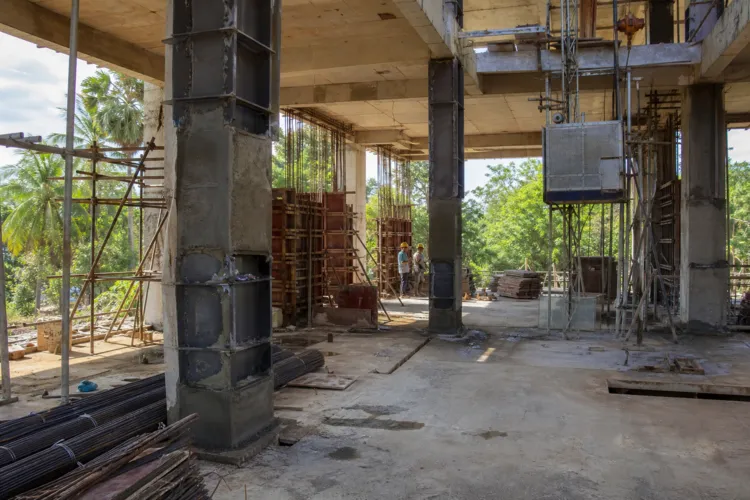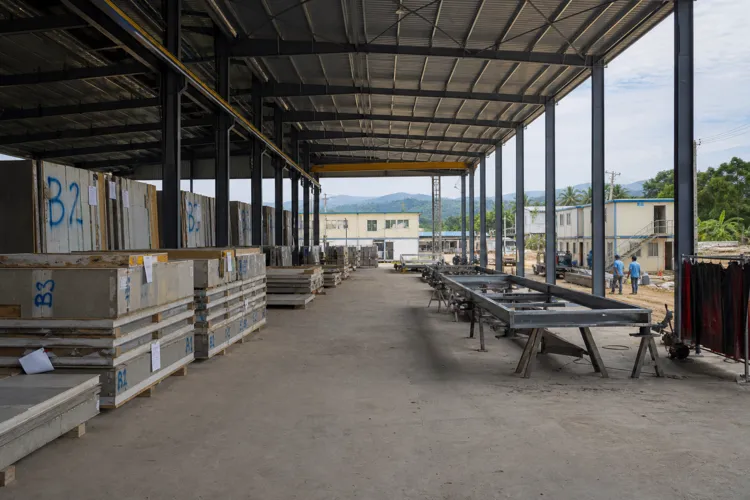
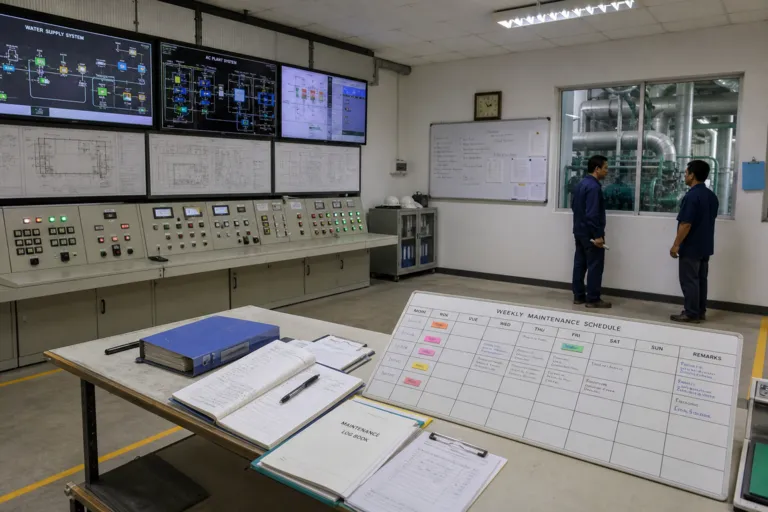
In 2026, building maintenance and smart building services in Myanmar need to be planned around risk, reliability, and operating continuity. GlobalData projects Myanmar’s construction industry to decline marginally by 0.6% in real terms in 2026, citing ongoing political instability and rising geopolitical trade tensions. The same source also notes that, in mid-March 2026, Myanmar’s Ministry of Foreign Affairs stated the country was confronting challenges stemming from economic instability, geopolitical upheaval, and climate change. In this environment, facilities teams tend to prioritize core systems, preventive schedules, and vendor readiness so buildings stay functional even when project timelines or budgets shift.
Investment conditions help explain why many owners focus on maintaining what they already have. According to the Directorate of Investment and Company Administration (DICA), Myanmar secured MMK835.8 billion (US$398 million) in foreign direct investment (FDI) in the first 10 months of FY2025-26 (April 1, 2025, to March 31, 2026). The same GlobalData report describes this as a sharp decline from MMK656.2 million (US$222.2 million) during the same period of FY2024-25, reflecting an estimated drop in inward FDI amid uncertainty during February and March 2026. For building owners, that uncertainty reinforces the value of measurable maintenance outcomes, predictable service contracts, and upgrades that reduce unplanned downtime.
Smart Building Services Move From “Nice-to-Have” to Operations Core
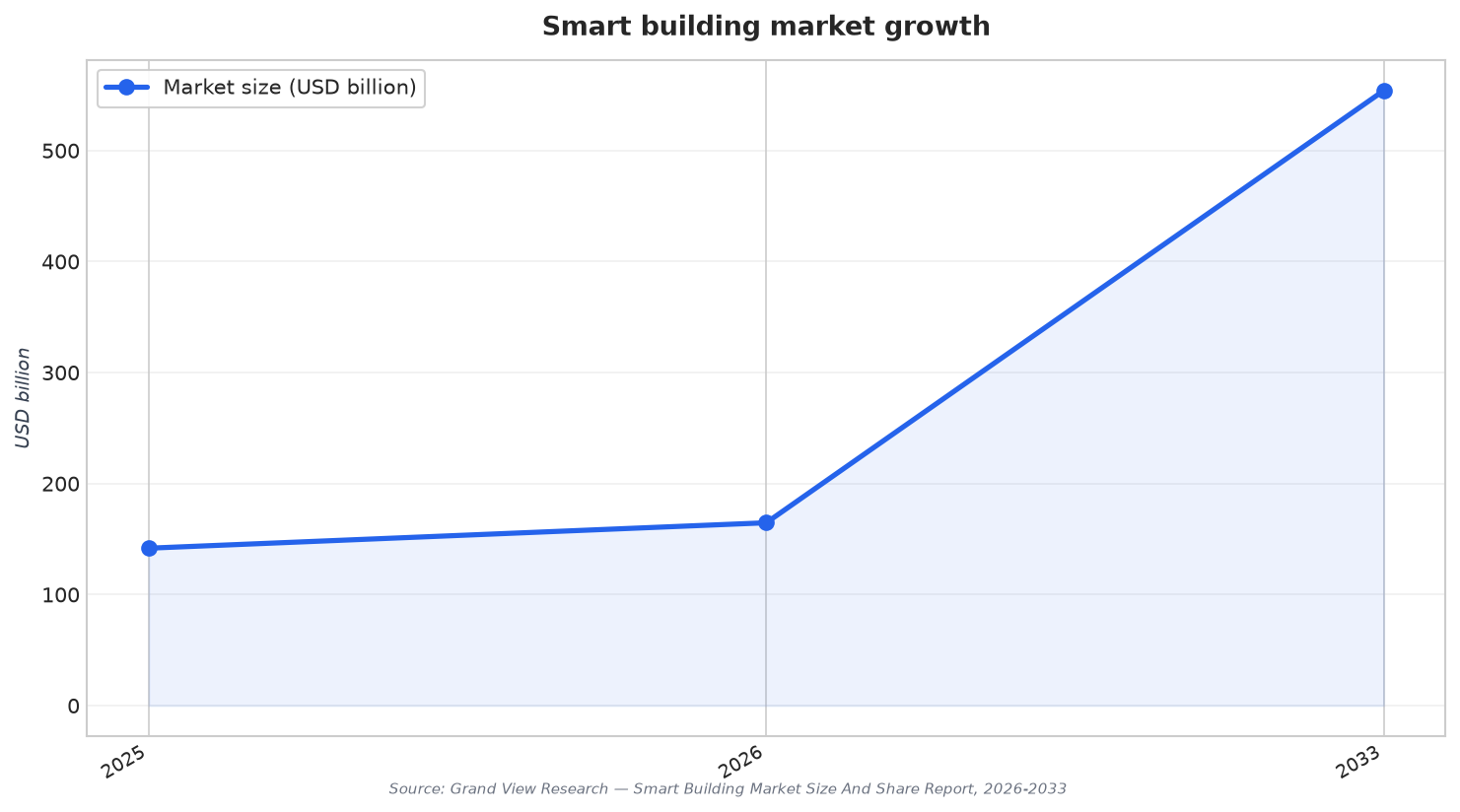
Smart building services are increasingly positioned as operational infrastructure, not just technology add-ons. Grand View Research estimates the global smart building market at US$141.8 billion in 2025 and projects US$164.7 billion in 2026, rising to US$554.0 billion by 2033 at a CAGR of 18.9% (2026–2033). It also states North America held over 35% of revenue in 2025, and that the commercial segment accounted for over 53% in 2025. In parallel, Mordor Intelligence estimates a 2026 global market size of US$163.07 billion, and highlights why service capability matters: it notes that solutions held 67.40% of revenue in 2025, while services are forecast to record a 17.20% CAGR through 2031. For Myanmar properties, these global signals support a pragmatic approach: start with monitoring and controls that make maintenance work easier to plan and verify.
Service scope is also widening from basic upkeep into integration, support, and lifecycle performance management. Precedence Research states the services segment is expected to account for the largest share over the next decade, driven by demand for system integration, support and maintenance, consulting services, and deployment. It also notes the support and maintenance service segment is expected to grow at the fastest CAGR during the forecast period. For building maintenance teams, this implies a shift toward operational partnerships, where providers handle not only routine tasks but also the “keep it running” layer for connected systems. This service-led view aligns with the broader global building maintenance services market: Econ Market Research values it at US$90.32 billion in 2026 and anticipates US$213 billion by 2035, at a CAGR of 10.1% (2026–2035).
Within the Myanmar facilities management market discussion for 2026, maintenance planning also ties to how the built environment may evolve over the next few years. GlobalData expects Myanmar’s construction industry to grow by 4.4% in real terms during 2027 to 2030, supported by investments in manufacturing, transport, and renewable energy sectors. It adds that Myanmar’s National Electrification Master Plan aims to increase electricity production capacity from approximately 6,000 MW in 2024 to 12,000 MW by 2030, and that the government is drafting a new 20-year energy development plan (2026–45) to expand clean energy. For facility operators, energy-related upgrades and smarter controls can be framed as readiness measures that support stability, measurement, and long-run operating discipline as the country’s power landscape changes.
What is the near-term construction backdrop for building maintenance in Myanmar in 2026?
What global numbers indicate smart building demand is rising in 2026?
How do smart building services relate to maintenance, support, and integration?
What does the outlook for the Myanmar facilities management market depend on most in this article’s view?
What energy capacity target could shape future facility energy planning in Myanmar?