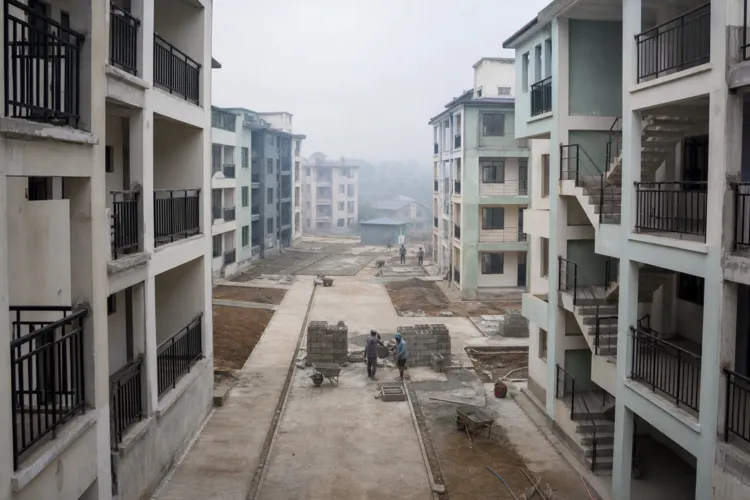
Myanmar’s construction environment in 2026 is shaped by uncertainty, but it still points to a long runway for upgrades. GlobalData projects Myanmar’s construction industry to decline marginally by 0.6% in real terms in 2026, citing ongoing political instability and rising geopolitical trade tensions. Over 2027 to 2030, GlobalData expects growth of 4.4% in real terms, supported by investment in manufacturing, transport, and renewable energy. For owners and contractors, this combination often elevates retrofit and compliance work because it can be planned in phases, targeted at the most vulnerable assets, and tied to broader capital programs rather than treated as an isolated expense.
Investment signals also matter for how quickly safety upgrades can move from planning to execution. GlobalData cites DICA data that Myanmar secured MMK835.8 billion ($398 million) in foreign direct investment (FDI) in the first 10 months of FY2025-26 (April 1, 2025 to March 31, 2026). It also notes this marked a sharp decline from MMK656.2 million ($222.2 million) during the same period of FY2024-25, reflecting an estimated drop in inward FDI amid geopolitical and internal uncertainty in February and March 2026. In that funding context, retrofit scopes that are clear, auditable, and tied to code compliance can be easier to justify and to sequence with other asset upgrades.
What Seismic Retrofitting Looks Like in 2026 Procurement
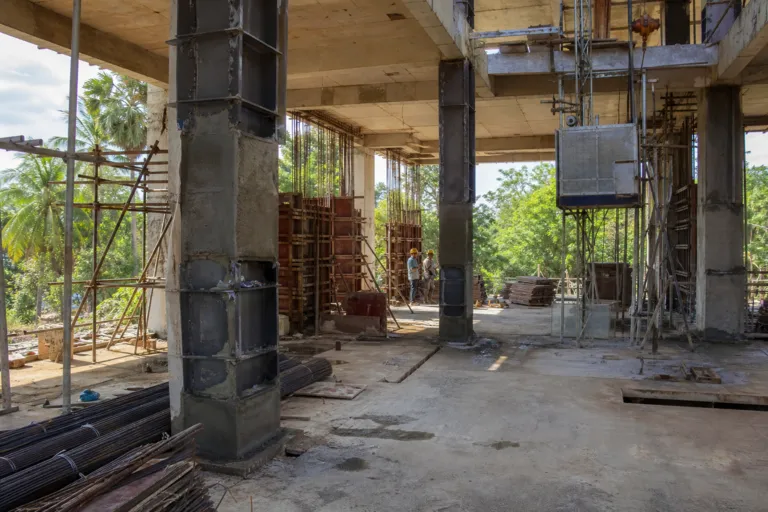
Seismic retrofitting is not the same as designing a new structure under modern seismic codes. Rimkus explains that engineers start by diagnosing vulnerabilities already embedded in walls, connections, and foundations, typically beginning with a comprehensive structural assessment. It highlights connection-focused upgrades such as roof-to-wall clips, diaphragm chords, wall-to-foundation anchors, and beam-column welds, and notes that inexpensive hardware upgrades can double the strength of outdated connections. Rimkus also observes that financial institutions increasingly require seismic risk assessments before approving loans or underwriting large properties, and that retrofitted buildings may qualify for lower insurance premiums, improved financing terms, and greater market value.
Material and component choices are increasingly influenced by code enforcement and by the split between new construction and retrofit demand. IndexBox describes the global market for building seismic joints as driven by the codification and enforcement of seismic safety standards, with demand bifurcated between new construction and retrofitting of existing buildings to meet modern seismic codes. IndexBox also frames a broader global shift in seismic reinforcement materials from 2026 to 2035, moving beyond reactive retrofitting toward proactive resilience engineering embedded in new construction and major upgrades, propelled by stricter regulatory updates in major earthquake-prone economies. As context, Dataintelo reports the global seismic isolation retrofit device market was valued at $3.8 billion in 2025 and is projected to reach $7.1 billion by 2034, with Asia Pacific accounting for $1.61 billion in revenue and a 42.3% share in 2025.
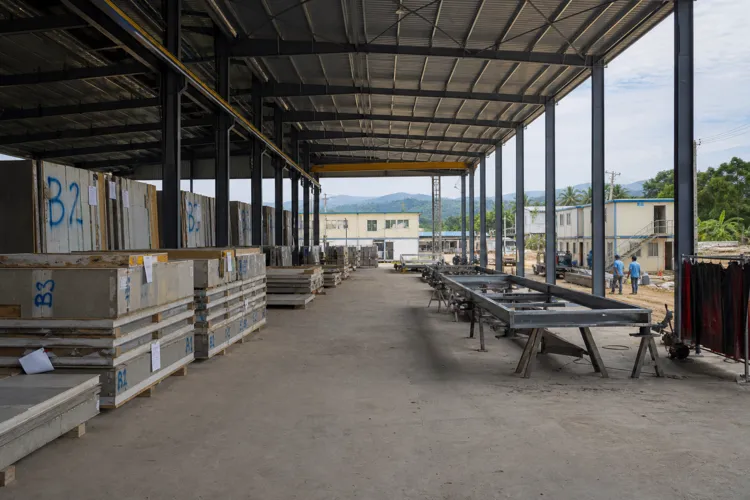
Within Myanmar, industrialization and standardized methods can also support faster delivery of compliant upgrades. A ResearchAndMarkets.com update distributed via Globe Newswire says Myanmar’s prefabricated construction market is projected to grow by 10.2% annually to reach MMK 228,592.2 million in 2026, after a CAGR of 11.8% between 2021 and 2025. It forecasts a CAGR of 9.1% from 2026 to 2030, rising from MMK 207,480.2 million in 2025 to approximately MMK 324,200.2 million by 2030. For the Myanmar earthquake-resistant construction market, prefab growth can matter because it can improve repeatability across structural details, shorten site time, and make it easier to package retrofit-adjacent work such as targeted replacements, expansions, or standardized strengthening elements alongside broader renovations.
What is the 2026 outlook for Myanmar’s construction industry, and why does it matter for retrofitting?
What retrofit actions are commonly highlighted for older buildings under modern seismic expectations?
How do financing and insurance considerations influence seismic retrofitting decisions?
What global market figures provide context for demand in the earthquake-resistance supply chain?
How is the Myanmar earthquake-resistant construction market connected to prefabricated building growth?