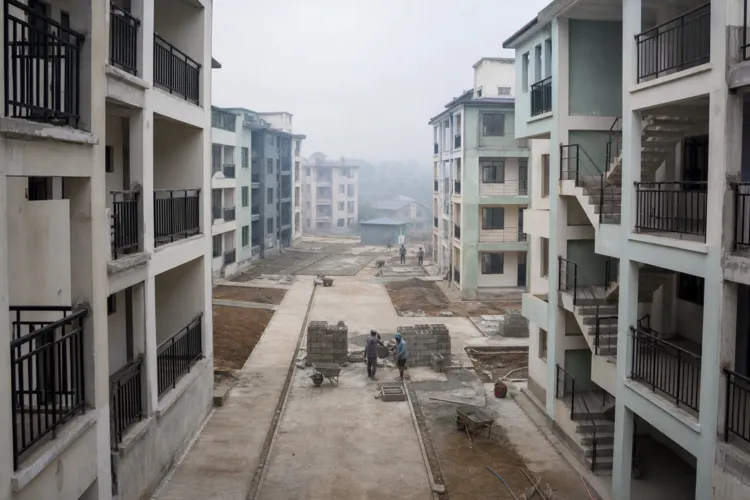
Reconstruction-led buying decisions in 2026 sit inside a mixed outlook for the Myanmar steel market. GlobalData projects Myanmar’s construction industry will decline marginally by 0.6% in real terms in 2026, tying the weakness to ongoing political instability and rising geopolitical trade tensions. The same source notes that, in mid-March 2026, Myanmar’s Ministry of Foreign Affairs stated the country was confronting challenges from economic instability, geopolitical upheaval, and climate change. For steel and rebar buyers, this matters because procurement is often synchronized with project starts, funding availability, and material import logistics rather than only with headline demand.
Investment signals are also uneven, and they can affect the timing and scale of reconstruction programs that consume rebar. According to the Directorate of Investment and Company Administration (DICA), Myanmar secured MMK835.8 billion ($398 million) in foreign direct investment (FDI) in the first 10 months of FY2025-26 (April 1, 2025, to March 31, 2026). The same GlobalData excerpt describes this as a sharp decline from MMK656.2 million ($222.2 million) during the same period of FY2024-25, and links the shift to uncertainty during February and March 2026. For steel distributors and fabricators, these conditions can translate into stop-start ordering patterns for rebar and long products used in structural and civil works.
What Prefabrication Growth Could Mean for Rebar and Long Products
One of the clearest demand-side growth cues comes from prefabricated construction, where iron and steel are explicitly listed among key materials. A ResearchAndMarkets.com update carried by Yahoo Finance projects Myanmar’s prefabricated construction market will grow by 10.2% annually to reach MMK 228,592.2 million in 2026. It also reports the market recorded a CAGR of 11.8% between 2021 and 2025, and forecasts a 9.1% CAGR from 2026 to 2030, rising from MMK 207,480.2 million in 2025 to approximately MMK 324,200.2 million by 2030. As panelized, modular, component-based, and hybrid methods expand, they can shift rebar buying toward more standardized specifications and scheduled deliveries aligned with factory output and site assembly windows.
Supply-side risks show up upstream in alloys used in steelmaking, which can influence availability and pricing for downstream products such as rebar. IndexBox characterizes Myanmar’s ferro-silicon market as structurally import-dependent, with an estimated 85-95% of supply sourced from regional producers in China, India, and Southeast Asia, while domestic production is limited to small-scale operations serving niche local demand. The same report estimates steel and construction account for 65-80% of ferro-silicon consumption in Myanmar, and adds that logistics and border clearance costs create an estimated 15-25% premium to landed ferro-silicon prices versus regional benchmark levels. If reconstruction schedules tighten, these import-linked constraints can amplify procurement lead times and working-capital needs for steelmakers and rebar sellers.
It helps to separate Myanmar-specific conditions from global context when planning rebar sourcing for 2026. Polaris Market Research values the global steel rebar market at USD 258.02 billion in 2026 and projects a CAGR of 4.9% to 2034, figures that describe the worldwide market rather than Myanmar alone. Technavio similarly frames broader market dynamics, stating the steel rebars market is expected to grow by USD 66.2 million from 2026-2030 at a CAGR of 4.7%, and that APAC accounts for over 53% of the incremental growth. For Myanmar reconstruction stakeholders, these external demand trends matter mainly as context: they can affect regional supply competition and the availability of imported inputs that Myanmar buyers rely on.
What is the construction outlook in Myanmar for 2026, and why does it matter for rebar?
How fast is Myanmar’s prefabricated construction market expected to grow in 2026?
How import-dependent is Myanmar for ferro-silicon used in steelmaking?
What upstream cost factors can influence steel and rebar availability in Myanmar?
What should buyers watch in the Myanmar steel market when budgeting for reconstruction projects in 2026?