Myanmar’s industrial-zone story is often told through Thilawa Special Economic Zone (Thilawa SEZ), a flagship site positioned for manufacturing and trade-linked operations. Thilawa SEZ is a 2,500-hectare (6,200-acre) special economic zone being developed in Kyauktan and Thanlyin Townships, 25 kilometres (16 mi) south of Yangon city. A separate account also places the zone on a riverbank 14 miles southeast of Yangon, describing a gated, enclave-style site that differentiates itself with “high-grade hard infrastructures” and investment incentives. This difference in infrastructure quality is framed against a national backdrop that was ranked 134 out of 140 for quality of infrastructure in a cited 2015 ranking.
For investors evaluating Myanmar industrial real estate, operational dates and development sequencing matter because they affect when land, utilities, and compliance processes become usable. The project was announced in January 2011, and a consortium including Japan Thilawa SEZ Company, Myanmar Thilawa SEZ Holdings, a Thilawa SEZ management committee, and the Japan International Cooperation Agency (JICA) was established on 29 October 2013 to proceed with development. Construction on the US$3.28 billion project began in May 2014. The first phase was slated to complete in 2016, but it became operational at the end of September 2015, aligning with reporting that the zone officially opened for business in September 2015.
How Thilawa’s Location Connects Industry to Ports and Corridors
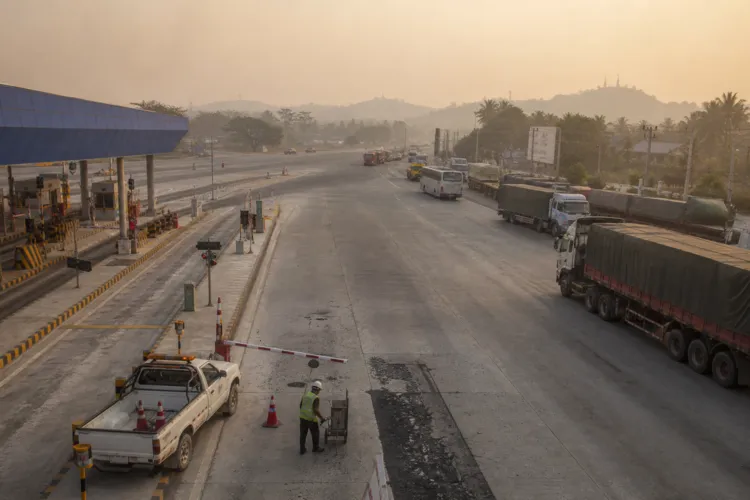
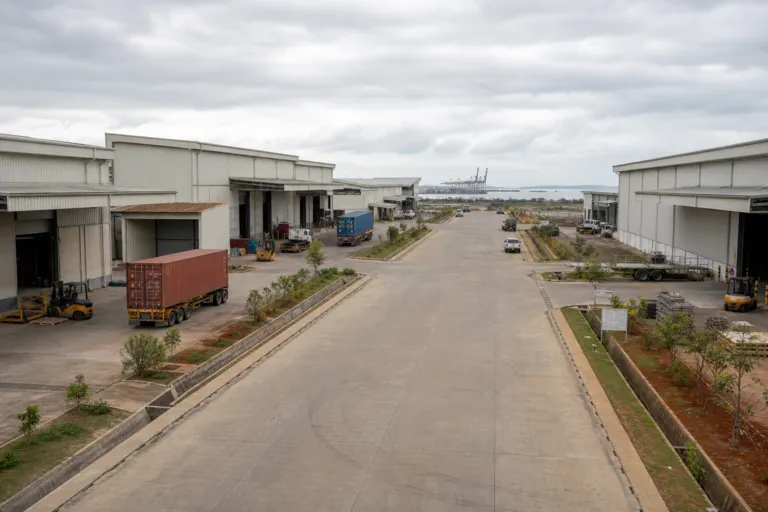
Sources link Thilawa’s investment appeal to how industrial sites connect with port capacity, warehousing, and cross-border corridors. A logistics-market report says Thilawa SEZ concentrates bonded warehousing investment and third-party logistics (3PL) infrastructure around Yangon Port, and that this clustering draws cross-border road freight corridors toward Thailand and China. It also states that garment exporters and agricultural traders drive containerized TEU movements through Yangon Port. In that same framing, terminal operators expand yard capacity at Thilawa SEZ to accommodate bonded warehousing clusters serving textile and perishable export segments, supporting hub-and-spoke distribution patterns that radiate toward Thailand and China border corridors.
Administrative and regulatory clarity can be as decisive as physical infrastructure in an investment zone. A 2026 legal publication describes Thilawa SEZ as Myanmar’s flagship industrial and manufacturing hub and says its guide compiles the legal and administrative framework governing the zone. It highlights practical coverage of licensing, taxation, labour, environmental compliance, customs, and operations, positioning the zone as one of Myanmar’s most established investment zones. Separately, the logistics report credits the Directorate of Trade’s digitization protocols with compressing port clearance timelines and attracting bonded warehouse investment into Thilawa SEZ, tying paperwork modernization to on-the-ground real estate demand.
Broader national context in the sources reinforces why zones with dedicated infrastructure and governance can become focal points. One overview notes that Myanmar faces challenges including political instability, sanctions, and infrastructure limitations, while key sectors such as agriculture, natural gas exports, mining, manufacturing, and cross-border trade remain central. Wikipedia’s economy entry adds that Japan is helping build the Thilawa Port, which is part of Thilawa SEZ, and helping fix the electricity supply in Yangon. It also notes that Thailand is forging ahead with a bigger version of Thilawa at Dawei on Myanmar’s Tenasserim Coast, illustrating how multiple industrial-zone projects shape investor attention.
Where is Thilawa SEZ located relative to Yangon?
How large is Thilawa SEZ?
When did Thilawa SEZ’s first phase become operational?
What does this imply for Myanmar’s industrial property and site selection?