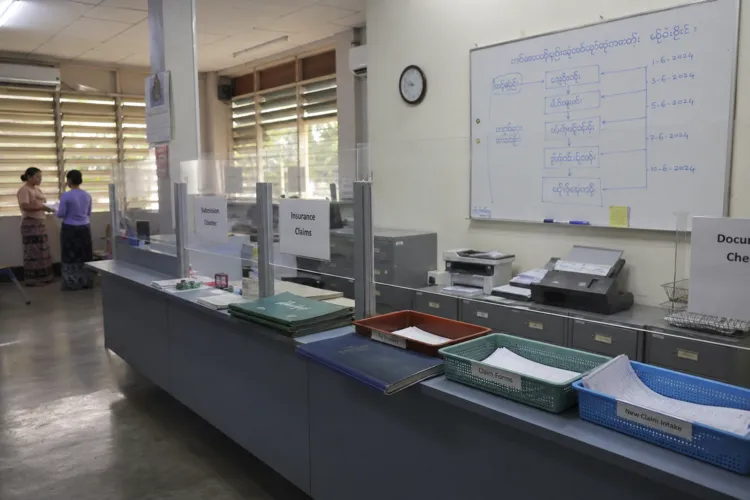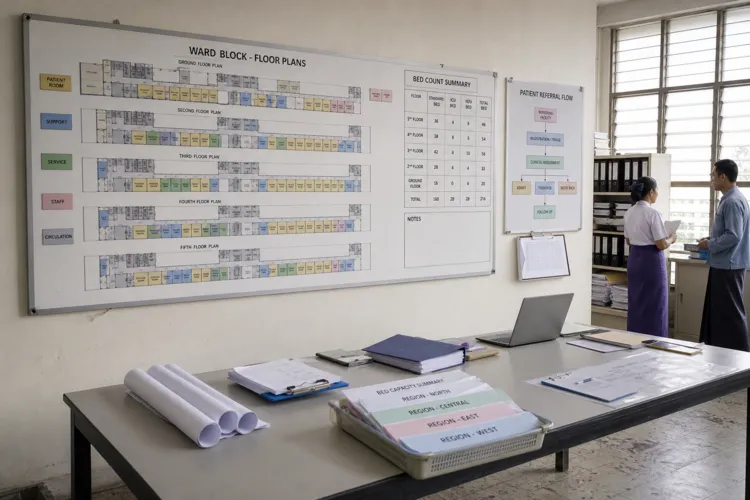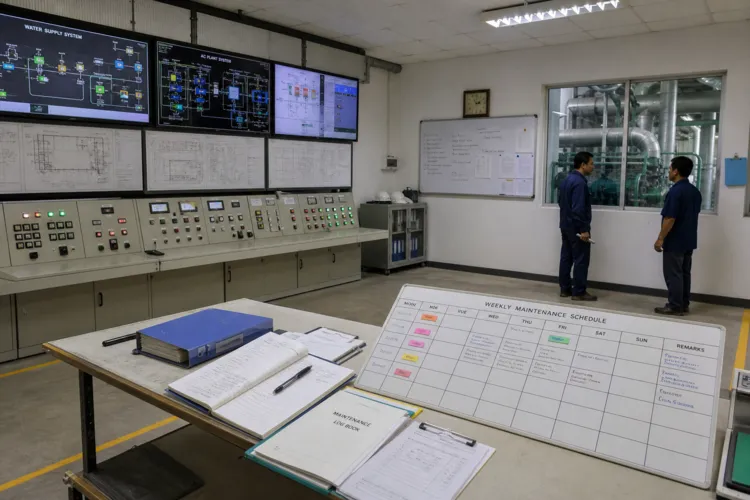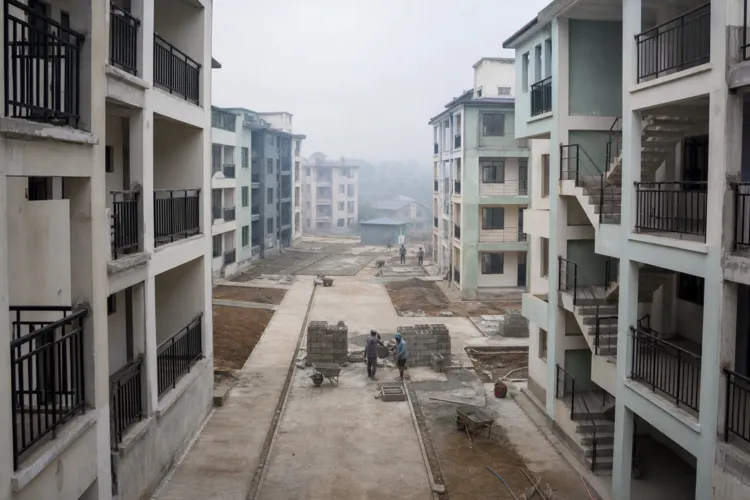
In 2026, Myanmar’s need for medical laboratory testing and diagnostic imaging is tied to basic system constraints and a low starting point. Public healthcare infrastructure is described as severely limited, with approximately 1,000 public hospitals, many poorly equipped and understaffed, and concentrated in Yangon and Mandalay. That scarcity creates broad demand across device categories because upgrading even fundamentals can change service capacity. Myanmar also imports nearly 100% of its medical devices, which makes supply continuity, distributor reach, and documentation central to day-to-day purchasing decisions in both laboratory and imaging workflows.
Buying channels are split between higher-end private providers and structured procurement run by international organizations. Major private hospitals such as Asia Royal Hospital, Parami General Hospital, and Pun Hlaing Siloam Hospital are described as operating at near-international standards and actively sourcing international medical equipment. In parallel, WHO, MSF, and ICRC are cited as maintaining significant medical equipment procurement in Myanmar, with UN agencies, MSF, and ICRC described as running large procurement budgets through international tender processes. For suppliers of lab analyzers, consumables, or portable imaging, this mix shifts commercial strategy toward both relationship-driven sales and tender readiness.
What Drives 2026 Lab and Imaging Demand in Myanmar
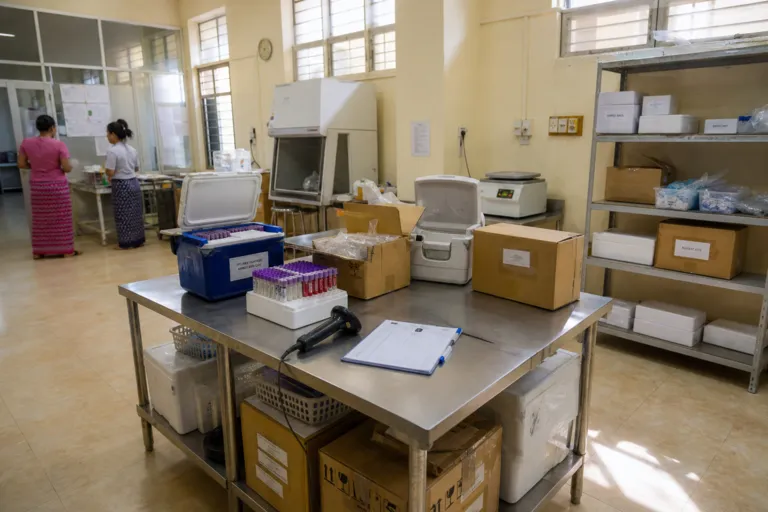
Clinical demand signals highlighted for Myanmar include a high burden of infectious diseases, specifically malaria, TB, and dengue, which are noted as sustaining diagnostic device demand. Product categories described as in demand include basic diagnostic equipment, laboratory supplies, point-of-care diagnostics, and portable imaging, including battery-operated systems. These needs are reinforced by logistics realities: import dependence and the need for reliable distribution create pressure for suppliers to pair equipment sales with ongoing supply of consumables, parts, and service support, especially where public facilities are poorly equipped and private facilities expect near-international performance.
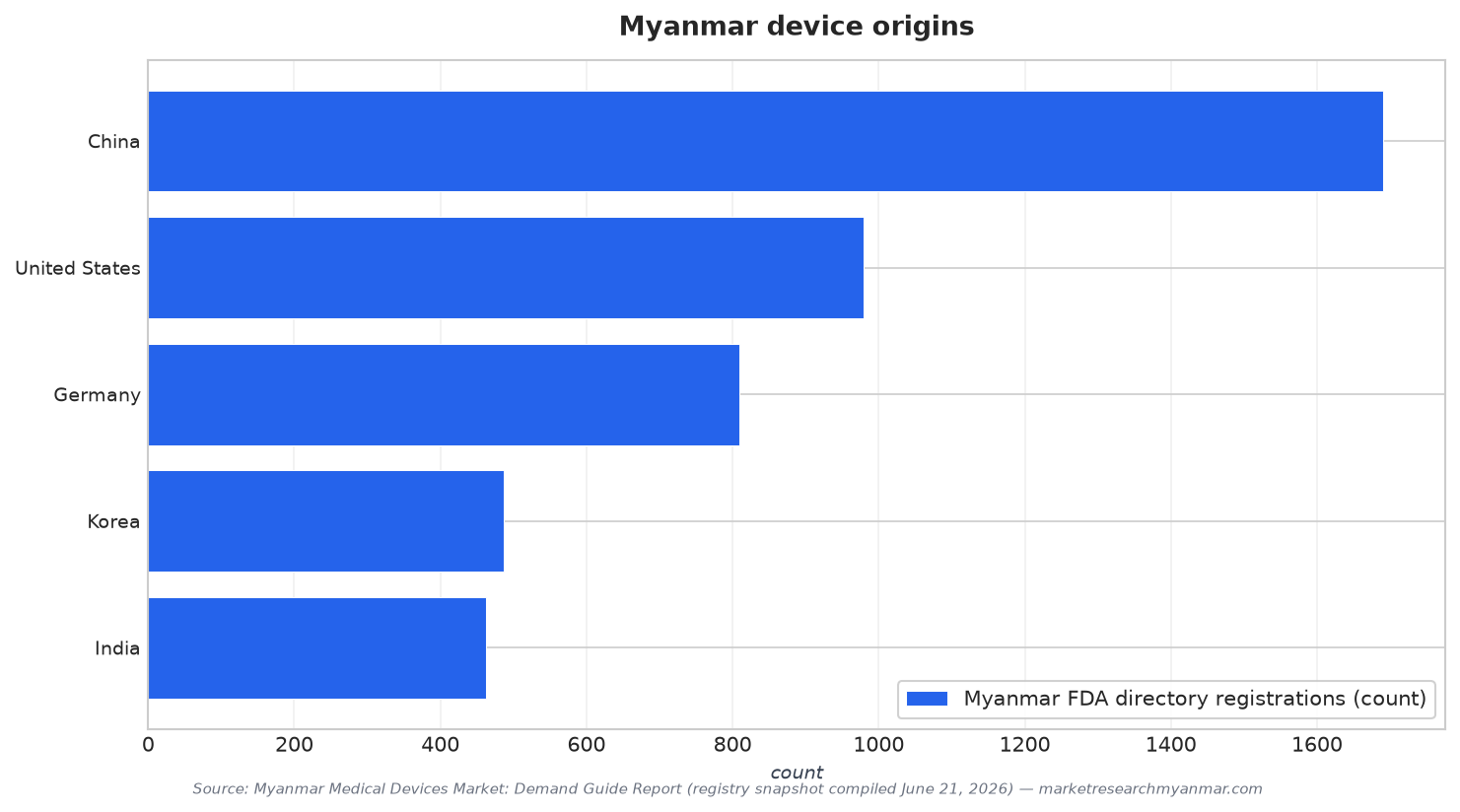
Regulatory compliance affects what can actually be sold and supported. Myanmar’s Department of Food and Drug Administration maintains an official Medical Device Directory, and rules require imported or distributed devices to be registered. A registry snapshot compiled on June 21, 2026 reports 6,068 active medical product records, covering 4,404 unique product generic names, involving 286 unique local importer companies holding active registrations. The same snapshot shows visibility by legal country of origin: China leads with 1,691 registrations (27.9%), followed by the United States with 980 (16.2%), Germany with 809 (13.3%), Korea with 487 (8.0%), and India with 462 (7.6%). This registration footprint can influence which lab and imaging brands are easiest to source through registered channels.
Distribution concentration is another practical constraint for the Myanmar diagnostics market in 2026. Importer registration share is led by Sea Lion Company Limited with 600 registrations (9.9%), followed by Yee Shin Company Limited with 412 (6.8%), A A Medical Products Limited with 364 (6.0%), Okkar Thiri Company Limited with 340 (5.6%), and Zizawa Company Limited with 262 (4.3%). Together, the top five hold 1,978 registrations, or 32.6% of the database, which can shape pricing, availability, and after-sales coverage. As global context, the Diagnostic Imaging Market is valued at USD 82.42 billion in 2026 in one report, while another projects a medical imaging market of $45.5 billion in 2026; these are not Myanmar-specific figures, but they signal continued worldwide investment in imaging capacity and technology that can flow into import-led markets.
What is shaping demand for laboratory diagnostics and imaging in Myanmar in 2026?
Who are the main purchasing channels for diagnostic equipment in Myanmar?
What does the 2026 device registry snapshot reveal about market access?
How concentrated is importer registration in Myanmar?
What are priority product categories linked to diagnostic services demand?