Myanmar’s fuel retail landscape in 2026 is best understood as a trade-and-distribution system rather than a production-led market. ISP-Myanmar states that around 95% of total fuel demand is met through imports, while domestic production accounts for only about five percent. The same source cites estimates (as of March 4, 2026) that Myanmar consumes around 3.2 million gallons of fuel a day, equivalent to roughly 3.8 million metric tonnes a year. This import dependence means petroleum retail availability is tightly linked to shipping, border trade continuity, and the ability of importers and distributors to secure foreign exchange and manage procurement lead times.
Import reliance is reinforced by structural constraints upstream and at refineries. IndexBox describes Myanmar’s crude petroleum oil market as structurally import-dependent, with imports and refined-product inflows supplying an estimated 70–90% of consumption. It also notes that refining capacity is limited to a small number of ageing plants with combined nameplate capacity well below domestic demand, so even domestically produced crude is often exported or processed abroad rather than refined locally. For the downstream, that translates into a retail and wholesale network that must plan around inflows of diesel, gasoline, and fuel oil, rather than around local refinery runs and stable domestic supply.
What Sets Costs and Moves Fuel to Inland Demand
Pricing dynamics in Myanmar are closely tied to external benchmarks and risk premiums. IndexBox reports that pricing typically tracks Singapore benchmark crude and product assessments, plus a logistics, insurance, and country-risk premium often in the USD 3–10 per barrel range. It adds that currency volatility can create a further 10–30% swing in landed costs. For retail and commercial buyers, these mechanics mean pump prices and wholesale offers can change quickly even without a major shift in local consumption. The same report points to diesel and fuel oil as dominant end uses, together accounting for an estimated 60–75% of refined product consumption, reflecting freight, agriculture, construction, and off-grid power generation demand.
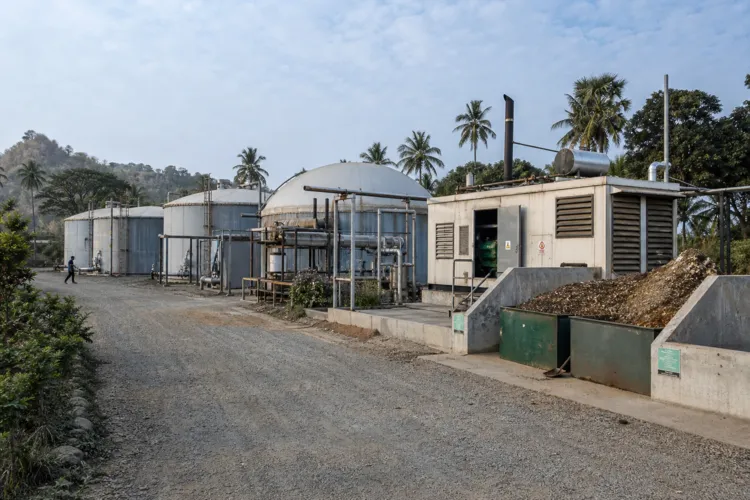
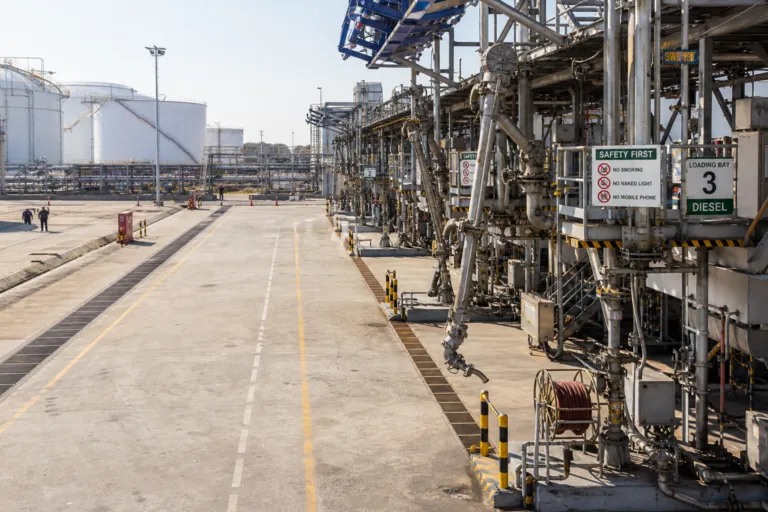
The physical flow of imported fuels has also evolved. IndexBox notes that distribution is increasingly intermediated by private importers, traders, and fuel-station networks, and that coastal terminals and border trade corridors play a larger role in moving product into inland demand centres. That matters because supply resilience is not only about buying product; it is also about storage, inland logistics, and continuity through corridors that can be disrupted. ISP-Myanmar reports that junta officials claim a 40-day fuel reserve, and that two vessels have already docked, with 14 more reportedly purchased and due to arrive. These claims, alongside the scale of daily consumption cited by ISP-Myanmar, highlight why inventory management is a central operational issue across the retail network.
Adjacent product markets underscore how import logistics and distribution channels shape broader petroleum-related demand. In lubricants, Mordor Intelligence expects the Myanmar market to grow from 101.97 million liters in 2025 to 103.2 million liters in 2026, forecasting 109.61 million liters by 2031 at a 1.21% CAGR over 2026–2031. Engine oils held 41.10% share in 2025, while automotive accounted for 50.90% of the market size in 2025. In biodiesel, IndexBox characterizes the sector as structurally small and import-leaning, with no nationwide B2 or B10 mandate; it estimates biodiesel’s landed cost band at roughly 15–40% above conventional diesel on an energy-equivalent basis, and adds that logistics and storage constraints can raise delivered biodiesel prices in remote areas by an estimated 10–25%.
How import-dependent is Myanmar’s fuel supply in 2026?
What consumption level is cited for Myanmar’s fuel demand in 2026?
What factors shape pricing for imported fuels sold through retail channels?
How is the Myanmar fuel distribution market shifting in terms of logistics and players?
Which fuels dominate refined product consumption patterns in Myanmar?