
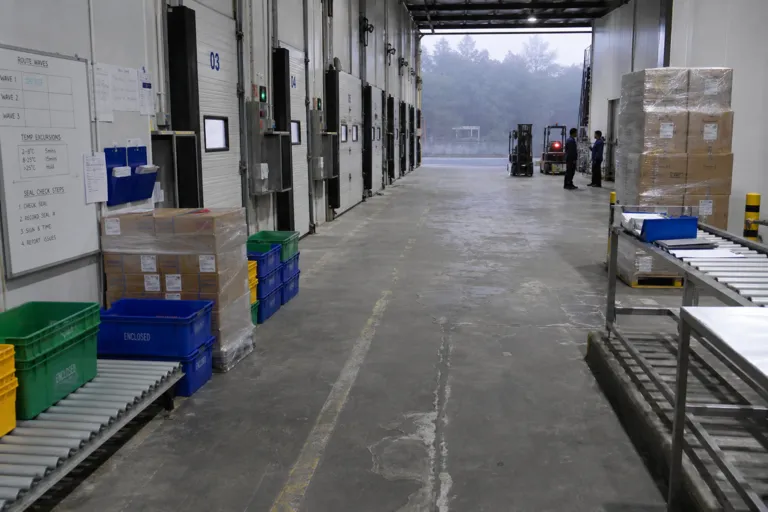
Planning pharma distribution in Myanmar in 2026 means reading two signals at once. The first is the country’s wider freight environment. MarkWide Research values the Myanmar freight and logistics market at $3.8 Billion in 2026 and projects expansion to $6.53 Billion by 2035, advancing at a 6.20% CAGR. The second is that temperature-sensitive handling is already a visible constraint. The same source notes that temperature-sensitive pharmaceuticals move through Yangon International Airport’s limited cold-chain facilities. That combination pushes distributors to think beyond basic transport and warehousing. It puts emphasis on predictable clearance, controlled storage, and monitoring that can stand up to documentation expectations in regulated pharma flows.
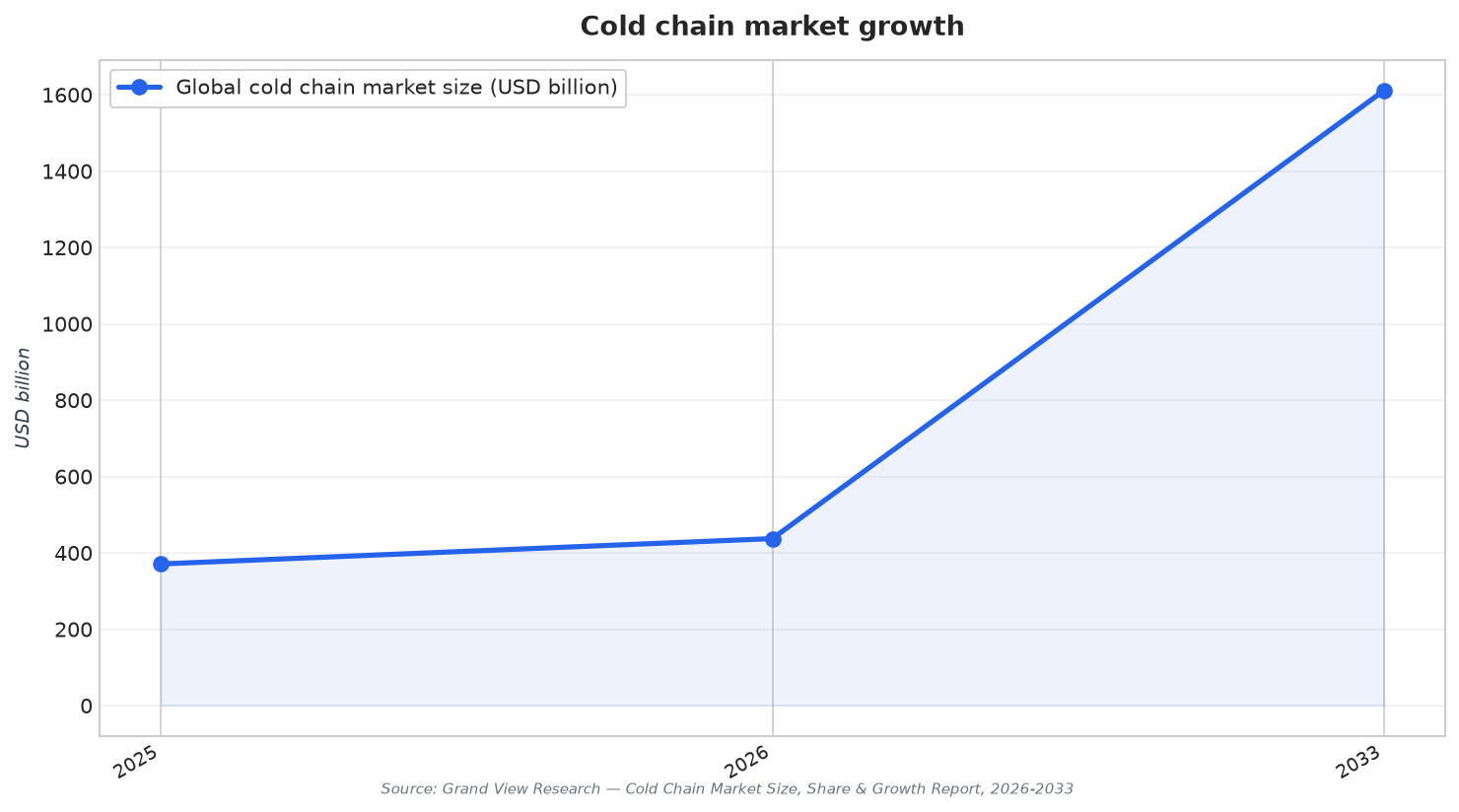
Cold-chain demand is rising globally, and that matters because multinational standards and service models tend to flow into emerging markets through partners and procurement. DataM Intelligence reports the global pharmaceutical cold chain logistics market reached US$ 22.75 Billion in 2025 and is expected to grow to US$ 44.1 Billion by 2033, at a CAGR of 9.12% for 2026-2033. In parallel, Grand View Research values the global cold chain market at USD 371.1 billion in 2025 and projects growth from USD 437.5 billion in 2026 to USD 1,611.0 billion by 2033, at a CAGR of 20.5% from 2026 to 2033. Grand View Research also links pharmaceutical cold chain demand to stringent regulatory norms, citing Good Distribution Practices (GDP) in the European Union (EU) as a driver for investment in temperature-controlled logistics infrastructure.
What GDP-Compliant Cold Chain Means for 2026 Planning
GDP expectations are increasingly shaping how drug makers choose logistics partners, especially when distribution is outsourced. Mordor Intelligence estimates the cold chain logistics market at USD 384.9 Bn in 2026, forecasting USD 555.4 Bn for 2032, and flags ultra-low-temperature mRNA vaccine distribution and pharmaceutical outsourcing to GDP-compliant 3PLs as principal growth drivers. The report also notes that drug makers that outsource distribution need partners that combine certified pharmaceutical handling with cold capacity for biologics. As an example of network build-out, Mordor Intelligence states that in August 2026 IAG Cargo added Kuala Lumpur International Airport to its pharmaceutical network, where a GDP-certified facility handles active and passive temperature-controlled shipments. For Myanmar distribution teams, that kind of regional network move matters when selecting lanes, transshipment points, and handling partners that can document compliance steps end-to-end.
Technology choices are becoming inseparable from cold-chain execution, because monitoring and traceability reduce temperature excursions and support audits. DataM Intelligence highlights real-time monitoring as a core growth driver, citing IoT-enabled sensors, real-time tracking, and data loggers used to ensure product integrity and regulatory compliance. On the domestic logistics side, MarkWide Research describes GPS-enabled cargo monitoring and cloud-based customs data integration providing real-time visibility on Thailand-Myanmar corridors, with agricultural exporters piloting these systems. In parallel, Myanmar-focused market coverage from 6Wresearch frames pharma traceability as a structured market with defined components. Its Myanmar pharma serialization market segmentation includes solution types such as track & trace software, barcode printing systems, serialization hardware, and regulatory compliance, and technology categories including blockchain/cloud, 2D/QR coding, optical scanners, and AI validation tools. Together, these inputs point to a 2026 playbook where cold chain handling, documentation, and digital visibility are treated as one system.
Distribution channel design also shapes cold-chain requirements, because the endpoint determines packaging, dwell times, and handoff controls. 6Wresearch’s Myanmar prescription drug market segmentation lays out distribution channels that include hospital pharmacies, retail pharmacies, online drugstores, and clinics, alongside formulation types such as injectables and extended release products. That channel mix can increase the importance of last-mile discipline and consistent storage conditions across multiple nodes. Globally, DataM Intelligence links growth to last-mile cold chain delivery, supported by direct-to-patient models, pharmaceutical e-commerce, and decentralized clinical trial distribution, while also noting challenges such as high operational costs, infrastructure gaps, and stringent regulatory requirements. In the Myanmar pharmaceutical logistics market, a practical 2026 strategy is to map each channel to a validated handling approach, then align airport and warehouse capacity choices to the cold-chain limits described locally, especially where facilities are constrained.
What is one hard capacity constraint to consider for Myanmar pharma cold chain in 2026?
How fast is the global pharmaceutical cold chain logistics market growing?
Why does GDP compliance matter when selecting outsourced cold-chain partners?
Which technologies are emphasized for monitoring and traceability in cold chain logistics?
What is the 2026 baseline size for Myanmar’s broader freight and logistics sector that supports the Myanmar pharmaceutical logistics market?