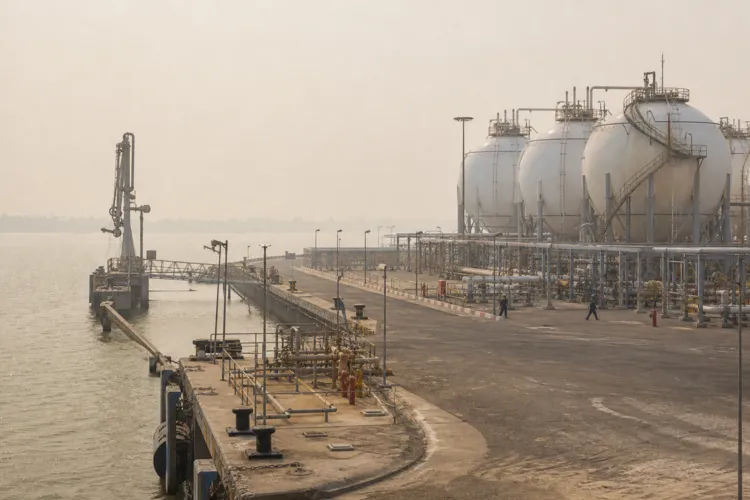

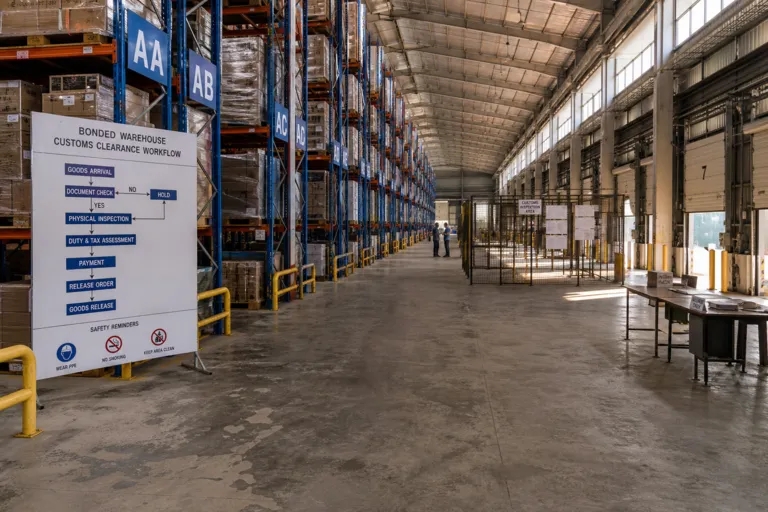
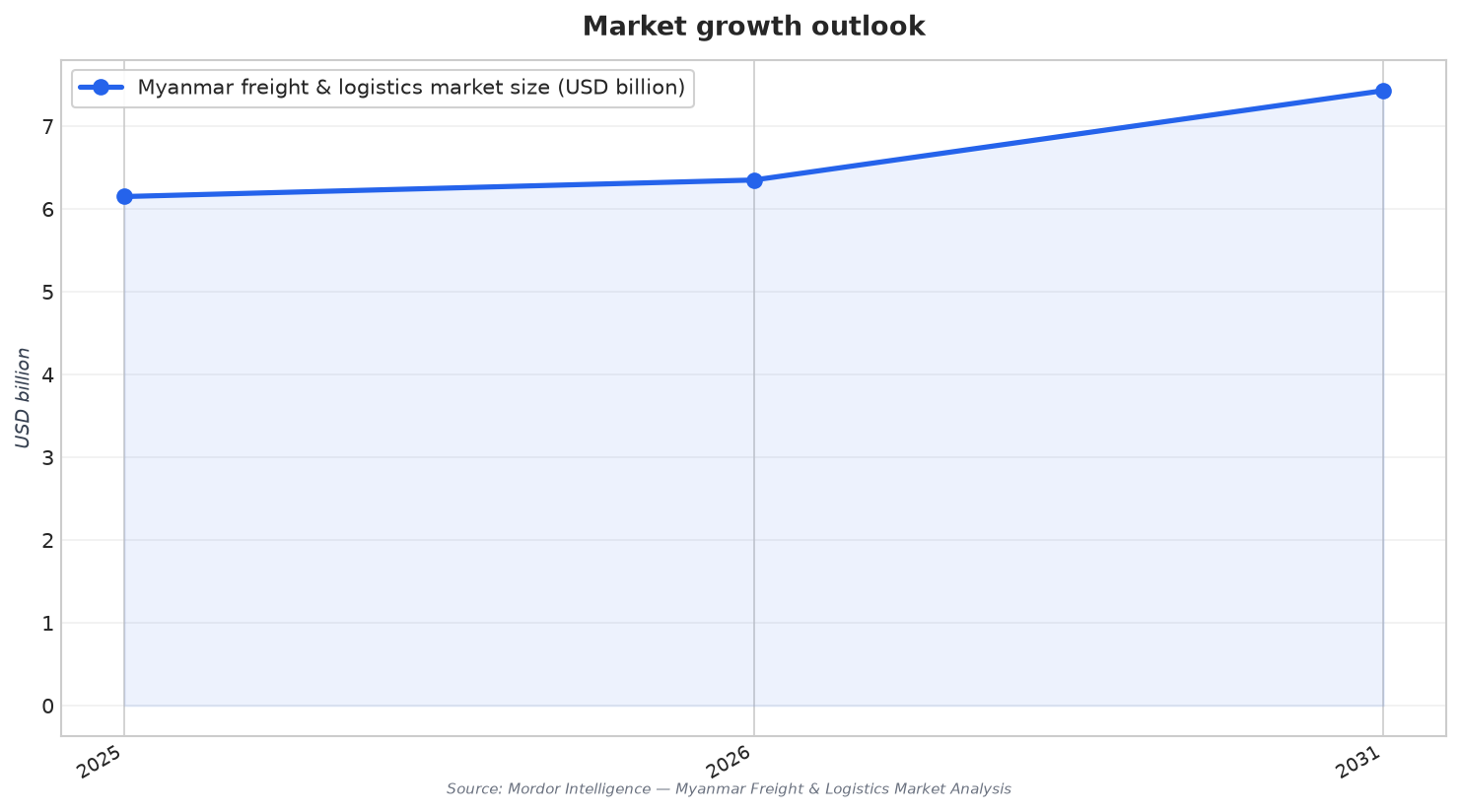
In 2026, demand signals for free-zone and bonded warehousing in Myanmar are increasingly tied to how the broader freight and logistics system is evolving. Mordor Intelligence expects Myanmar’s freight and logistics market to increase from USD 6.15 billion in 2025 to USD 6.35 billion in 2026 and reach USD 7.43 billion by 2031, growing at a 3.21% CAGR over 2026–2031. MarkWide Research describes a restructuring around customs modernization and cross-border corridor activation, and links the Directorate of Trade’s digitization protocols to compressed port clearance timelines that are attracting bonded warehouse investment into Thilawa Special Economic Zone (SEZ). This is important because bonded facilities are not only storage points; they sit at the intersection of customs handling, port flow, and timing decisions for importers and exporters.
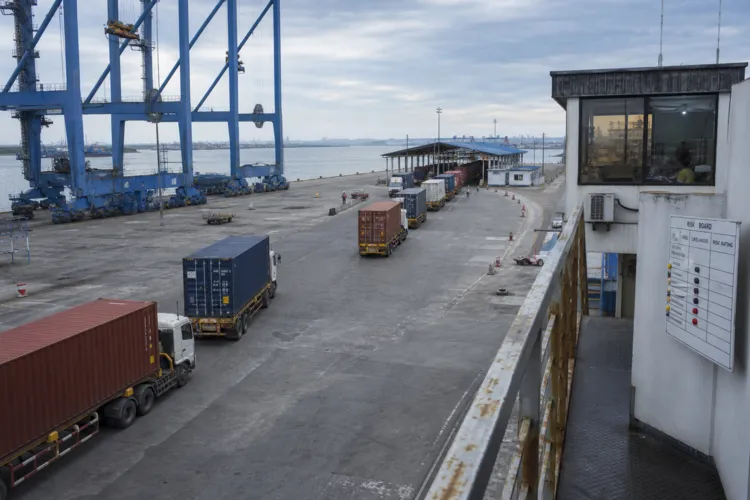
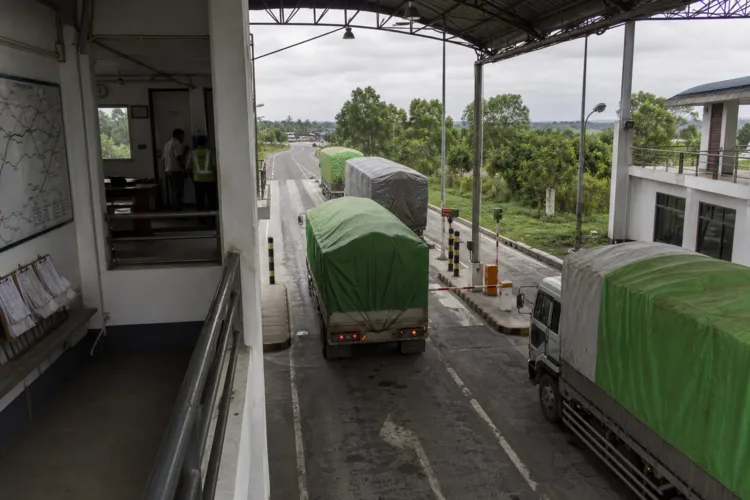
Port-linked throughput and corridor connectivity shape where bonded inventory is most valuable. MarkWide notes that A.P. Moller – Maersk leverages terminal operations at Yangon Port to control container throughput capacity, while Kerry Logistics Network Group anchors cross-border road freight corridors linking Myanmar to Thailand and Vietnam. At the market level, Mordor Intelligence reports that sea and inland waterways accounted for 79.02% of freight forwarding revenue share in 2025, and road freight captured 71.12% of the freight transport segment revenue share in 2025. This mix supports a practical logic for bonded warehousing concentration near Yangon Port and along road corridors: operators can stage goods closer to the dominant modes while using customs-controlled facilities to manage release timing, consolidation, or onward movement as documentation clears.
2026 Demand Drivers: Customs Digitization, Cold Chain, and E-commerce Pressure
Several demand drivers converge in 2026, especially for providers aiming to build sticky value-added services around bonded zones. MarkWide highlights that Track & Trace technology is an investment priority as shippers demand real-time visibility across the Thailand–Myanmar border, which supports higher expectations for controlled, auditable inventory handling. Cold-chain requirements also reinforce the need for specialized warehousing. MarkWide reports that agri-commodity exporters are contracting temperature-controlled storage capacity to meet quality requirements for perishable shipments into China and Thailand. Mordor Intelligence quantifies the facility backdrop: non-temperature-controlled facilities held a 91.28% revenue share in 2025, while temperature-controlled capacity is expected to grow at a 3.07% CAGR over 2026–2031. Together, these trends push bonded operators to add compliance-grade processes and, where feasible, temperature-controlled capabilities within SEZ-linked footprints.
E-commerce and parcel networks add another layer to how the Myanmar bonded warehouse market is being shaped. Market Research Myanmar, citing Mordor Intelligence, states that Myanmar had 5.9 million e-commerce users generating USD 3.80 billion in gross merchandise value. In the same backdrop, courier, express, and parcel (CEP) services are projected to expand at a 4.69% CAGR between 2026–2031, while domestic CEP held a 66.58% revenue share in 2025 and international CEP is forecast to grow at a 4.88% CAGR over 2026–2031. These numbers matter for bonded and free-zone planning because cross-border parcel growth increases the value of faster documentation handling and structured release workflows, particularly when customs platforms and digitization initiatives are intended to reduce friction and standardize processes across lanes.
Myanmar’s outlook in 2026 also fits into a global context where bonded and free-zone logistics services are expanding, but should be interpreted as comparison rather than a local forecast. Fact.MR projects the global free trade zone and bonded warehouse logistics services market to expand at a 6.8% CAGR from 2026 to 2036 and states bonded warehousing is expected to account for 31.4% share in 2026. Market Growth Reports adds that bonded warehousing represents around 45% of total FTZ warehouse demand globally, and that over 65% of companies in Asia-Pacific use bonded warehouse models to reduce regulatory costs and streamline fulfillment processes. For Myanmar, the most grounded local signals remain SEZ clustering near Yangon Port, customs digitization led by the Directorate of Trade, and growing need for temperature-controlled and trackable handling as trade lanes and parcel volumes develop.
What is driving bonded warehousing demand in Myanmar in 2026?
How fast is Myanmar’s freight and logistics market expected to grow around 2026?
Which transport modes and channels influence where bonded facilities make sense?
How does e-commerce activity connect to the Myanmar bonded warehouse market?
What do the sources say about temperature-controlled warehousing demand in Myanmar?