Myanmar’s transmission and distribution priorities in 2026 sit at the intersection of modernization needs and on-the-ground reliability constraints. In Myanmar’s power generation EPC landscape, grid modernization and integration is identified as a key trend, alongside ongoing needs to upgrade existing power infrastructure. At the same time, grid unreliability shows up as a practical constraint beyond the power sector itself. In telecom, power grid unreliability is cited as a driver of diesel generator dependency at rural tower sites, increasing operating costs and limiting expansion beyond grid-connected zones. For investors and contractors tracking the Myanmar power grid market, these cross-sector signals point to a modernization agenda that is as much about operational stability as it is about adding new technologies.
Metering is one of the clearest procurement-linked windows into modernization activity. Myanmar’s electricity supply or production meters market is described as structurally import-led, with an estimated 85–95% of units sourced from China, Thailand, and other ASEAN suppliers. Domestic assembly is limited, covering enclosures, wiring, and calibration for a small subset of low-voltage single-phase meters. Price bands in the same market show the spread between basic and more advanced devices: single-phase meters are roughly USD 8–25 per unit for basic imported models, while smart or three-phase variants range about USD 30–90. The market narrative also highlights an accelerating migration from electromechanical and basic electronic meters toward smart and prepaid-capable meters, linked to utility revenue-protection goals and donor-funded grid modernization programs.
Where 2026 Investment Pressure Shows Up First
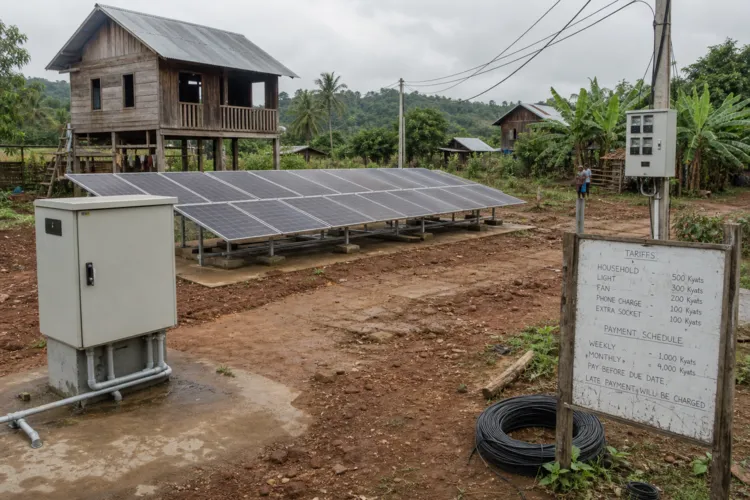
Myanmar’s metering demand is described as bifurcated between utility-scale procurement by the state distribution monopoly and a fragmented private segment tied to solar mini-grids, factory submetering, and commercial tenant billing. The private segment is expected to grow at 2–3x the utility rate through 2035, and off-grid and mini-grid projects are creating a distinct demand pocket for DC-capable and prepaid meters, with adoption rising fastest in Chin, Rakhine, and Shan states. However, the same source flags system constraints that affect modernization timing and cost. Foreign-exchange scarcity and import licensing friction can push formal import lead times to 8–16 weeks and inflate landed costs by 15–30% versus regional benchmarks. It also notes that grid instability and low rural electrification rates—roughly 50–60% national access—cap the addressable utility metering base and slow replacement cycles.
Regional capital availability matters because equipment and financing ecosystems are deeply connected across Southeast Asia. For ASEAN as a region, electricity demand is described as growing at 3–4% annually, while the World Economic Forum is cited as noting that ASEAN needs at least USD 200 billion in annual energy investment by 2030, compared with current levels of around USD 8 billion. The same regional source also references a USD 10 billion ADB de-risking fund and characterizes a broader under-deployment problem: a roughly USD 225 billion CAPEX deployment gap in power, grid, and EV value chains between 2026–2030, with the largest shortfall—about USD 210 billion—specifically in power and grid infrastructure. For Myanmar, these figures should be treated as context rather than local totals, but they help explain why mobilizing capital for transmission and distribution upgrades can be difficult even when needs are well understood.
Global grid modernization benchmarks also help frame what “modernization” typically includes, without implying identical budgets in Myanmar. One global report projects the power grid modernization market to reach USD 20.6 billion by 2035 from USD 7.6 billion in 2025, at a CAGR of 10.5% for 2026–2035. Another grid modernization source emphasizes that physical modernization includes transmission lines, substations, transformers, conductors, switchgear, protection equipment, and sensors, and notes that reliability and resilience accounted for 35.4% of market investment objectives. In the U.S., the Department of Energy announced nearly USD 1.9 billion in 2026 funding to improve reliability, strengthen transmission, and reduce electricity costs—figures that do not describe Myanmar, but underline how modernization programs often bundle hardware upgrades with reliability outcomes. For Myanmar’s investment planning, the local story remains anchored in practical procurement realities like import dependence, lead times, and the push toward smart and prepaid metering.
What are the clearest modernization signals for Myanmar transmission and distribution in 2026?
How import-dependent is Myanmar’s electricity meter supply chain?
What price ranges are cited for meters used in Myanmar?
What constraints can slow procurement and replacement cycles in Myanmar?
What should investors know about the Myanmar power grid market in 2026?