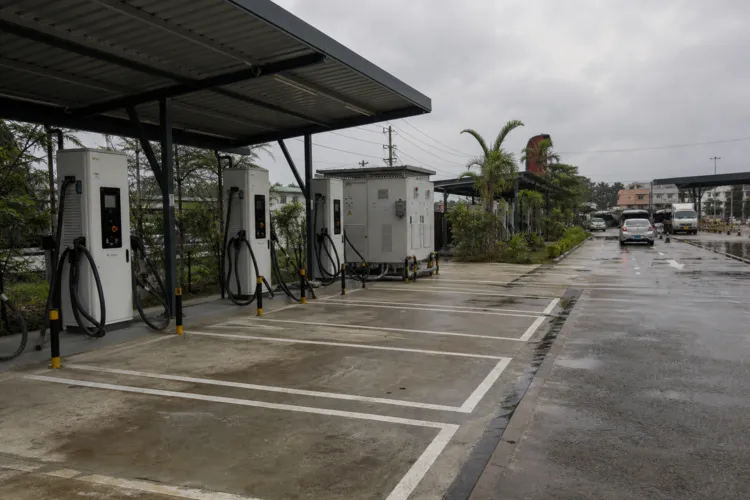

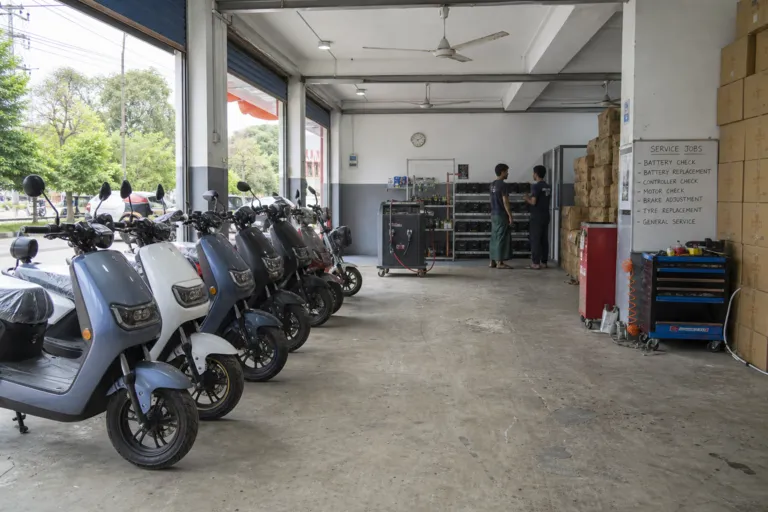
Momentum around electric two-wheelers in Myanmar is becoming easier to quantify. Data cited from the Myanmar Road Transport Department shows electric two-wheeler registrations reached 12,884 as of August 2025, up from 10,222 in October 2024. That change signals a faster adoption pace within a market still described as early-stage for new energy vehicles. The same source frames electric two-wheelers and three-wheelers as seeing “explosive growth,” while also noting real operational hurdles such as unstable power supply and insufficient charging facilities, which can shape where and how riders use electric options.
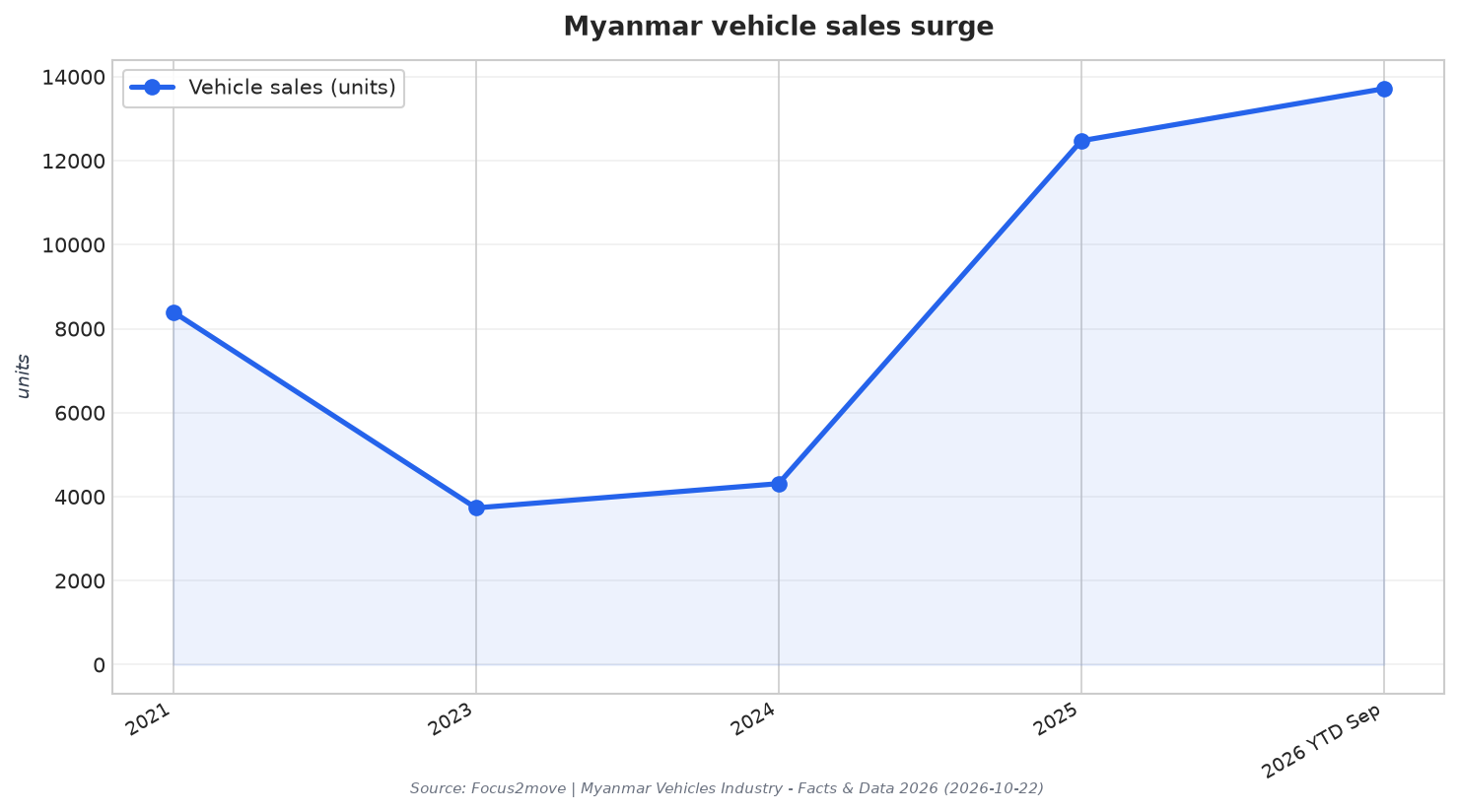
At the same time, the broader Myanmar vehicles industry is expanding sharply in 2026, creating a wider demand backdrop for two-wheelers of all types. Focus2move reports the market contracted from 8,398 units in 2021 to a trough of 3,733 units in 2023, stabilized at 4,311 units in 2024, then jumped 189.4% to 12,474 units in 2025. For 2026, year-to-date September sales reached 13,715 units, already 9.9% above the 2025 total. The same 2026 YTD figure is up 83.3% year on year versus 7,482 units in the same period of 2025, suggesting the overall demand environment is still expanding even off a larger base.
What 2026 Global Electric Two-Wheeler Trends Suggest for Myanmar
Global market context helps frame product and business-model choices likely to reach Myanmar via OEM lineups and importer offerings, but it should not be confused with local market size. MarketsandMarkets projects the electric two-wheeler market will grow from USD 5.31 billion in 2026 to USD 10.29 billion by 2035 at a CAGR of 7.6%. The same source says last-mile delivery and shared mobility fleets now account for a significant share of urban demand, pushing OEMs toward fleet-ready platforms, extended battery life, and integrated telematics, and it highlights subscription-based or battery-as-a-service (BaaS) approaches. It also calls out limited charging infrastructure as a key restraint across emerging economies, with networks described as fragmented and unevenly distributed in countries including India, Indonesia, Malaysia, and Mexico.
Technology positioning in the global electric two-wheeler segment also provides a lens for what consumers and fleet operators may look for in Myanmar, especially as product variety increases. MarketsandMarkets notes the 72 V battery segment is expected to account for the largest share of the electric two-wheeler market, describing it as an “optimal balance” of performance, range, and cost, and linking it to higher motor output and faster acceleration without the complexity of ultra-high-voltage systems. Product examples cited in that report include Bajaj Auto’s Chetak CS501 launched in January 2026 with a 2.5 kWh battery and 113 km range, and Ola Electric’s S1 Pro Sport introduced in August 2025 with up to a 5.2 kWh battery.
Putting the pieces together for the Myanmar electric motorcycle market in 2026, two signals stand out: adoption is measurable in registrations, and the overall vehicle market is operating in a stronger demand regime. Registrations of electric two-wheelers climbed to 12,884 by August 2025 from 10,222 in October 2024, while total vehicle sales reached 13,715 units YTD September 2026 and grew 83.3% year on year over the comparable 2025 period. The adoption curve will still have to contend with the practical constraint noted by local commentary: insufficient charging facilities and unstable power supply. That is why battery swapping is positioned in Myanmar-focused discussion as a supplement to traditional charging for two- and three-wheelers in areas where charging access is limited.
What do registrations say about electric two-wheeler adoption in Myanmar?
How strong was Myanmar’s overall vehicle market heading into 2026?
What global trends could influence Myanmar’s electric motorcycle market choices in 2026?
What battery architecture is expected to lead the electric two-wheeler market globally?