Livestock and poultry production remains a core livelihood activity in Myanmar, and that scale underpins vaccine and animal health product demand in 2026. A market report focused on vaccines for veterinary medicine in Myanmar estimates that 70–80% of farming households keep some combination of cattle, buffalo, pigs, ducks, and chickens. This creates wide but shallow demand. Many smallholders buy vaccines intermittently, while a smaller number of commercial operations drive recurring purchases based on structured protocols. For planning in 2026, this two-tier market structure matters as much as any single product trend.
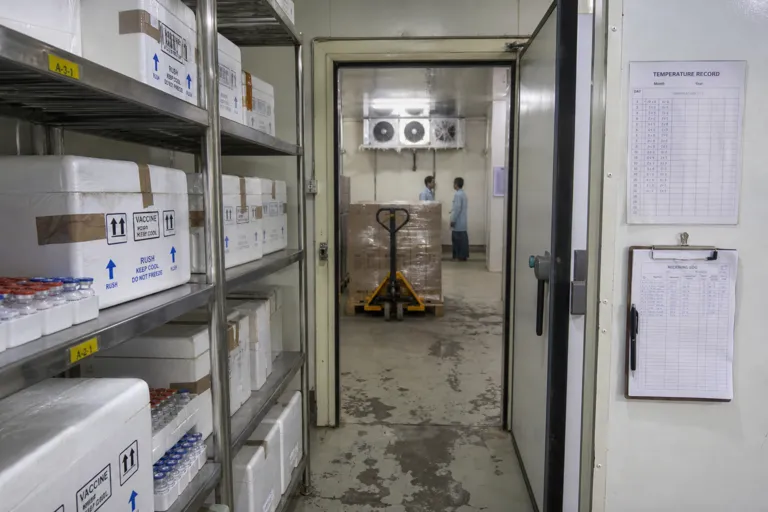
In Myanmar, the distribution reality is central because veterinary vaccines are temperature-sensitive biological products that require uninterrupted cold chain from import to administration. As a result, distribution economics favor importers and distributors with refrigerated warehousing, reliable power backup, and trained field staff. The same Myanmar-focused source notes domestic manufacturing is limited, which shifts the market’s center of gravity toward trade and distribution rather than local production. This raises sensitivity to border logistics, foreign-exchange access, and regional supplier relationships, and it means competitive advantage is often defined by product integrity and timely availability rather than price alone.
What Demand Growth Signals Mean for 2026 Purchasing
While the Myanmar vaccines market is described as modest by regional standards, growth expectations are framed as structurally supported by livestock intensification and rising protein demand. The Myanmar report sets a plausible growth range of 6–9% per year in value terms through 2035, and it also indicates that demand volume could expand by 50–80% by 2035 versus a 2026 baseline. The same outlook highlights that the fastest expansion is expected in poultry vaccines, with slower progress in large-ruminant categories where smallholder coverage remains uneven. A chart placed near these figures should make it easier to compare the annual value-growth range and the longer-run volume outlook.
Growth is also expected to be uneven across buyer types. Commercial poultry and pig operations are more likely to follow structured vaccination calendars, so they should account for a disproportionate share of incremental demand over time. In contrast, smallholder demand is described as more elastic and more dependent on government programs, donor projects, and seasonal disease pressure. The Myanmar report adds an important nuance for 2026 decisions: sustained improvements in rural cold-chain access or veterinary extension services could unlock a step-change in smallholder adoption that is not yet fully reflected in baseline growth expectations.
For context on how Myanmar fits into broader vaccine and animal health product dynamics, global market reports point to strong momentum in vaccines and vaccination technologies, even though those figures are not Myanmar-specific. One global animal vaccines report values the market at USD 15.85 billion in 2025 with a 9.7% CAGR during 2026–2034, and it states livestock vaccines held 64.5% share. Another global report projects the animal vaccines market at USD 13.4 billion in 2026 and USD 22.4 billion by 2035, at a 5.8% CAGR. A separate global livestock health report expects vaccination technology to represent 48% share in 2026, while veterinary pharmaceuticals account for 44% product share in 2026. Used carefully, these global benchmarks can help frame portfolio mix discussions inside the Myanmar veterinary and animal health market without implying that Myanmar shares the same sizing.
What is shaping livestock vaccine demand in Myanmar in 2026?
How fast is Myanmar’s veterinary vaccine market expected to grow after 2026?
Why does the cold chain matter so much for veterinary vaccines in Myanmar?
Which segments are expected to drive the most incremental vaccine demand in Myanmar?
What should buyers watch in the Myanmar veterinary and animal health market as adoption evolves?