Myanmar’s rice sector enters 2026 with a mix of steady production expectations and carefully watched export performance. The FAO GIEWS country brief (reference date 20-February-2026) forecast aggregate paddy production at 27.9 million tonnes, described as consistent with the 2020–2024 average. It also noted that the 2025/26 main paddy crop accounts for about 80 percent of total annual output, while the 2025/26 secondary paddy crop accounts for about 20 percent. Even with high domestic prices at planting time, sowings were estimated close to average, with constraints linked to restricted access to fields and markets in northern parts of the country, the high cost of agricultural inputs, and conflict-related marketing constraints.
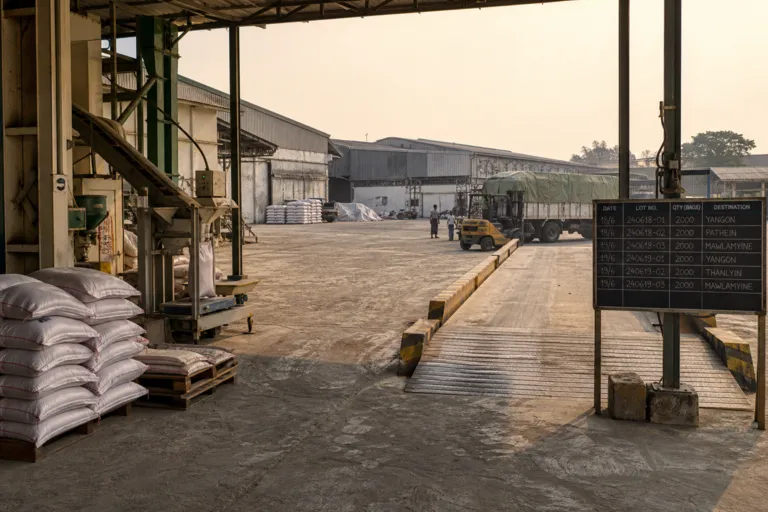
On trade, the same FAO brief forecast total cereal exports in the 2025/26 marketing year (July/June) at 3.6 million tonnes, including 1.5 million tonnes of maize. For rice specifically, FAO forecast rice exports in calendar 2026 at 2.1 million tonnes, down 14 percent from 2025. Separately, the Myanmar Rice Federation (MRF), as reported by Global New Light of Myanmar, stated that Myanmar’s rice export in the financial year 2025-2026 (beginning 1 April) exceeded 2.7 million tonnes and generated US$861 million. That update also described Myanmar’s rice trade as heavily reliant on sea trade, and said the federation aimed to achieve three million tonnes of rice exports in the FY 2025-2026.
Pricing, Seasonality, and What Buyers Watch in 2026
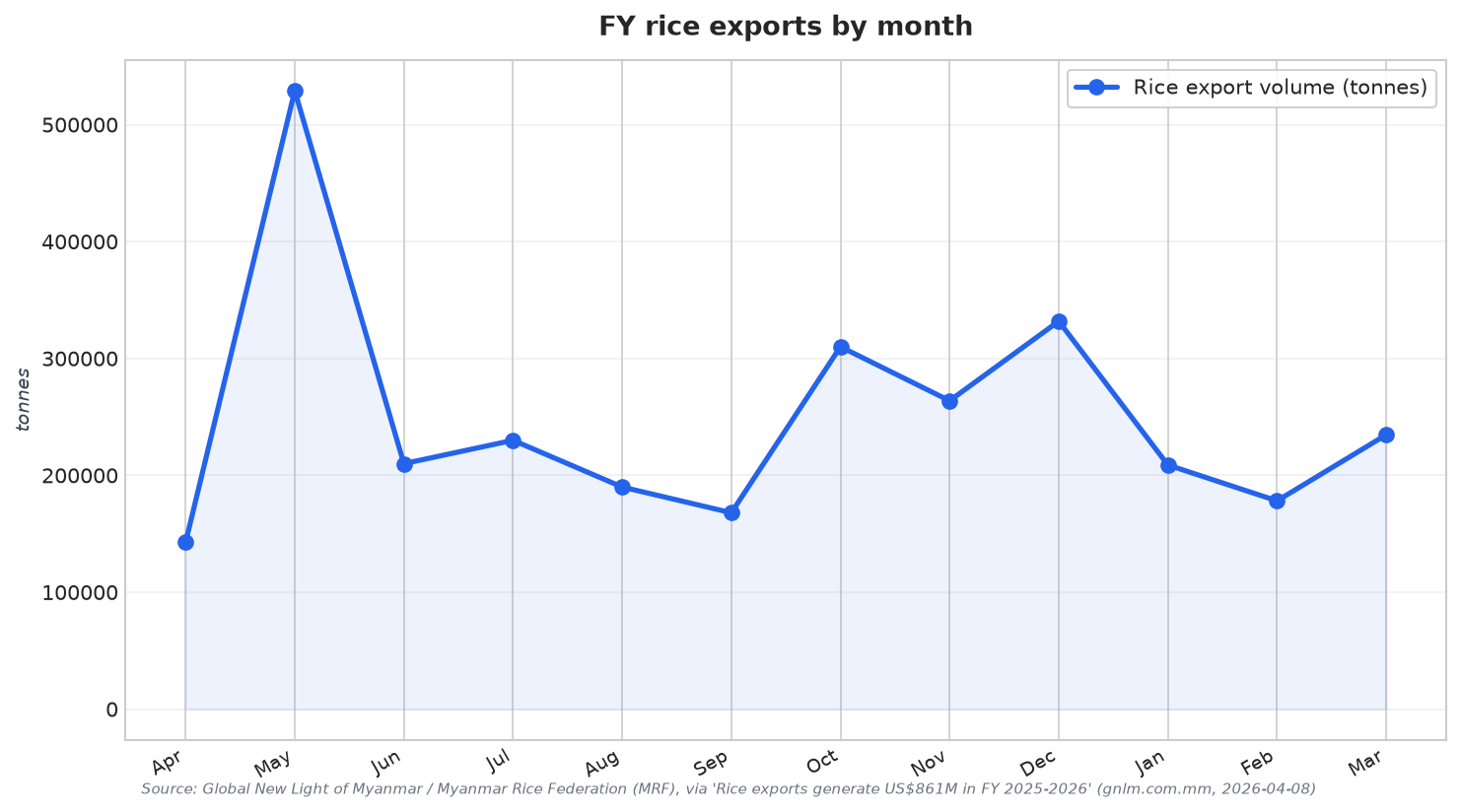
Domestic price signals matter for export availability and farmer decisions, and FAO reported a clear recent trend for one retail benchmark. Retail prices of Emata rice declined steadily between January 2025 and January 2026, reflecting increased market availability following commercialization of the 2024/25 harvests and, more recently, the 2025/26 main harvest. As of January 2026, FAO stated prices were about 10 percent below their elevated levels of a year earlier. For exporters and importers, month-to-month shipment pacing can also shape perception of reliability. MRF’s FY 2025-2026 breakdown listed shipments such as over 142,700 tonnes (US$52M) in April, over 529,00 tonnes (US$90M) in May, and over 331,869 tonnes (US$99M) in December, among other months through March.
Agricultural planning in 2026 sits alongside broader food-security pressures and logistics realities. FAO cited the Humanitarian Needs and Response Plan published in December 2025, which projected about 8.5 million people—about 15 percent of the total population—would face high levels of acute food insecurity in 2026. In this context, commercial decisions often require careful scenario work that connects farm production, milling, and export trading. The IndexBox “Myanmar’s Rice Market Report 2026” describes coverage across HS 100610, 100620, 100630, and 100640 and frames analysis by value-chain position (farm production, milling and processing, wholesale distribution, retail distribution, and export trading), with historical data for 2012–2025 and forecast data for 2026–2035. This is the kind of structured scope that Myanmar agriculture consulting teams can use to align product definitions and trade corridors before advising clients.
Global context can help benchmark how fast the broader rice economy is expected to expand, without assuming those totals apply to Myanmar. Mordor Intelligence estimated the global rice market size at USD 350.10 billion in 2025 and projected growth from USD 372.30 billion in 2026 to USD 505.32 billion by 2031, with a CAGR of 6.30% during 2026–2031. The same source added that Southeast Asia remains a key export theater, with Vietnam and Thailand shipping more than 15 million metric tons combined. It also stated per-capita consumption exceeds 100 kilograms in Bangladesh, Vietnam, and Myanmar. For Myanmar exporters, these global signals underscore why specifications, residue limits, and buyer requirements matter, especially when trade remains heavily reliant on sea routes.
What did FAO forecast for Myanmar rice exports in calendar 2026?
How much rice export value did MRF report for FY 2025-2026?
What did FAO say about paddy production and crop shares in 2025/26?
How can Myanmar agriculture consulting support rice exporters using these sources?
What was the reported retail price trend for Emata rice through January 2026?