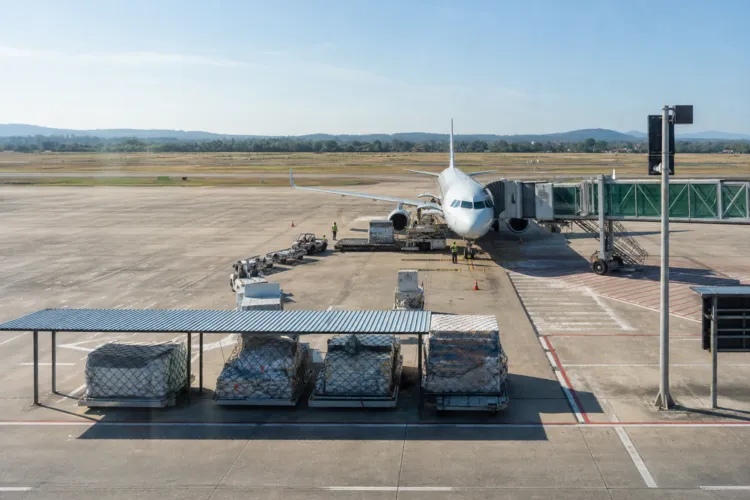
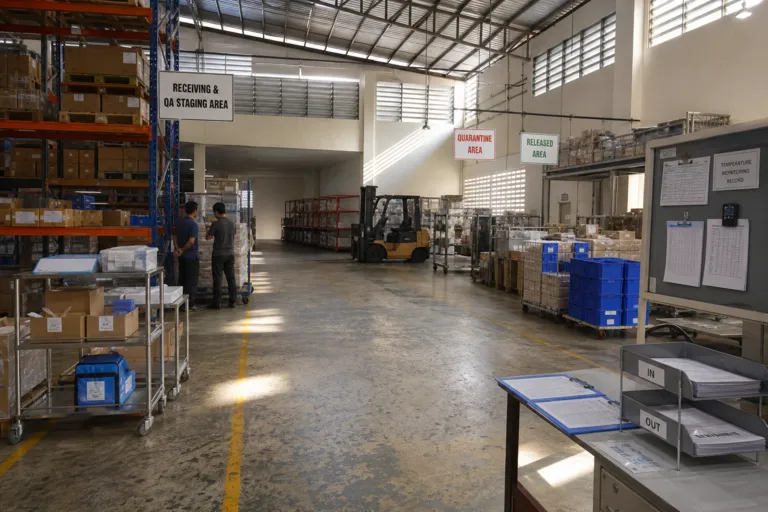
Medical equipment demand in Myanmar is closely tied to basic system constraints and a strong reliance on imports. Public healthcare infrastructure is described as severely limited, with approximately 1,000 public hospitals, many poorly equipped and understaffed, and concentrated in Yangon and Mandalay. Against that baseline, demand can span most device categories because the starting point is low. Private hospitals such as Asia Royal Hospital, Parami General Hospital, and Pun Hlaing Siloam Hospital operate at near-international standards and actively source international medical equipment, creating a clear purchasing channel for higher-quality devices.
Outside commercial buyers, international development and humanitarian organisations are a major procurement force. WHO, MSF, and ICRC are cited as maintaining significant medical equipment procurement in Myanmar, and UN agencies, MSF, and ICRC are described as having large procurement budgets that run through international tender processes. For suppliers, that matters because it shifts part of the market from relationship sales to formal tender participation. Demand signals also come from disease burden: malaria, TB, and dengue are specifically noted as sustaining diagnostic device demand, reinforcing the importance of reliable testing and related equipment supply.
How Registration Data Shapes Distribution Strategy
In the Myanmar medical devices market, regulatory compliance and channel selection intersect in the national registry. The Department of Food and Drug Administration (Myanmar FDA), under the Ministry of Health, maintains an official Medical Device Directory, and current rules require all imported or distributed devices to be registered. A registry snapshot compiled on June 21, 2026 reports 6,068 active medical product records, covering 4,404 unique product generic names, and involving 286 unique local importer companies holding active registrations. The regulatory framework is guided by the National Drug Law (1992) and a newer Myanmar Medical Device Law designed to align with ASEAN Medical Device Directive (AMDD) standards.
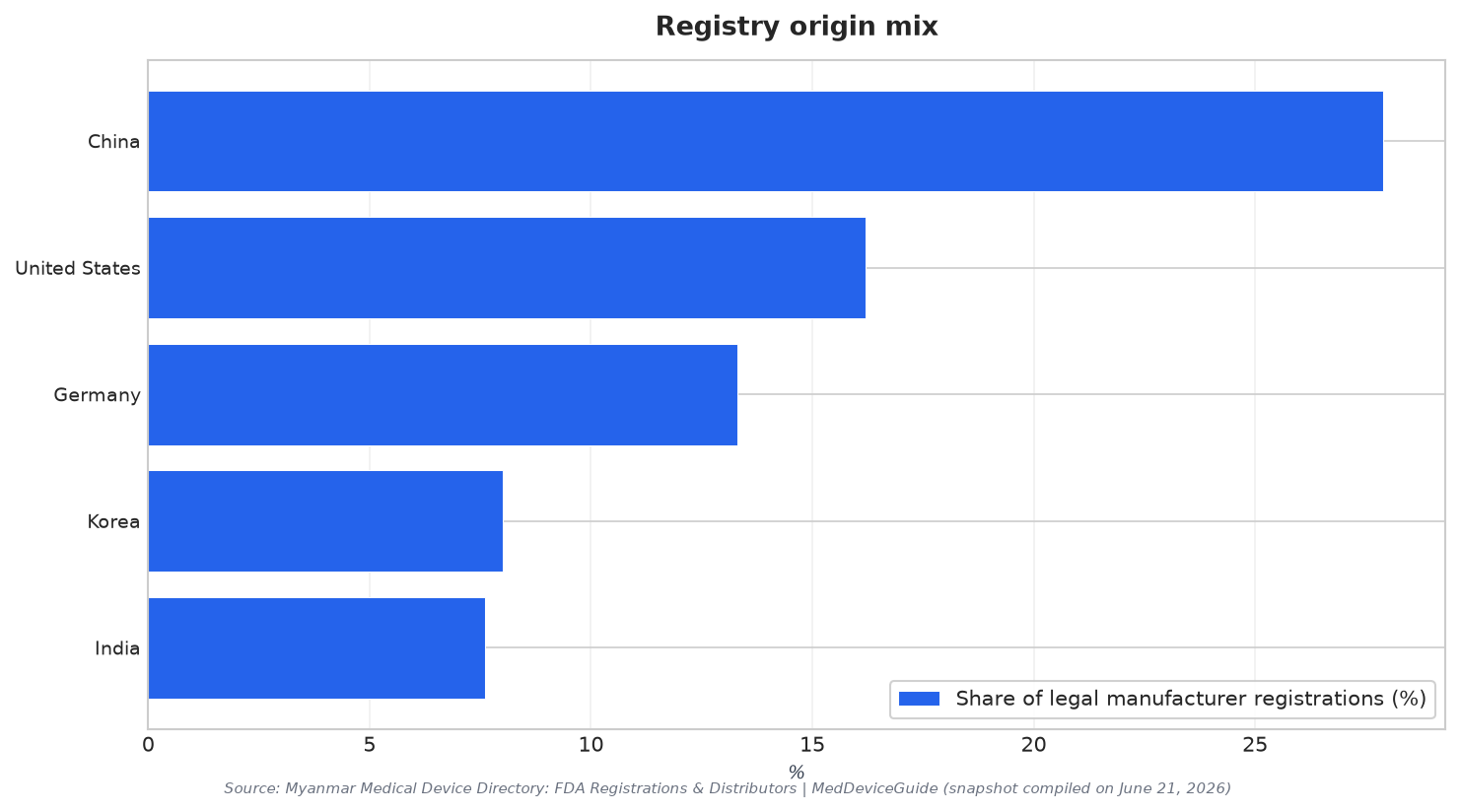
The same registry analysis highlights which manufacturing origins are most visible in the system, and it underscores distributor concentration risk. By legal country of origin, China leads with 1,691 registrations (27.9%), followed by the United States with 980 (16.2%), Germany with 809 (13.3%), Korea with 487 (8.0%), and India with 462 (7.6%). China is also the dominant physical manufacturing location, with 1,884 physical manufacturer registrations (31.0%), reflecting global outsourcing patterns. On the importer side, Sea Lion Company Limited leads with 600 registrations (9.9%), followed by Yee Shin Company Limited with 412 (6.8%), A A Medical Products Limited with 364 (6.0%), Okkar Thiri Company Limited with 340 (5.6%), and Zizawa Company Limited with 262 (4.3%). Together, the top five hold 1,978 registrations, or 32.6% of the database, which can affect partner choice and “registry lock-in” concerns.
Product-level demand can also be seen in smaller segments where market value is explicitly reported. Myanmar’s first-aid kit market totaled $52K in 2024, growing by 4% against the previous year, reflecting total revenues of producers and importers (excluding logistics costs, retail marketing costs, and retailers’ margins). More broadly, local supplier lists describe Myanmar as depending on imported medical equipment and devices from countries including the US, India, Turkey, Japan, and Germany, while noting that the Myanmar Food & Drug Administration regulates both pharmaceuticals and medical devices. For distribution planning, these signals point to a market where procurement spans public limitations, private hospital quality requirements, and humanitarian tenders, all under a registration-led route to market.
What is driving medical equipment demand in Myanmar?
How large is the Myanmar FDA medical device registry in the latest snapshot?
Which local importers hold the most registrations in Myanmar?
Which countries account for the most registered manufacturers by legal origin?
What do the sources say about the Myanmar medical devices market route to compliance?