Myanmar’s freight and logistics sector is projected to rise from USD 6.15 billion in 2025 to USD 6.35 billion in 2026, with USD 7.43 billion forecast by 2031 at a 3.21% CAGR over 2026–2031 (Mordor Intelligence). This backdrop matters for air freight capacity planning because growth is not only about aircraft. It also reflects how Myanmar is positioned as an overland bridge between China’s Yunnan Province and the Indian Ocean within the China-Myanmar Economic Corridor. Mordor Intelligence also notes USD 5.6 billion worth of Chinese-backed projects announced in 2024, including the Kyaukphyu deep-sea port valued at USD 7.3 billion, highlighting continued momentum in multimodal infrastructure that can shift freight flows and indirectly influence air cargo demand.
Within this broader expansion, the strongest recovery signals for the Myanmar air cargo market are visible in the relative growth rates assigned to air-linked segments. In Myanmar’s freight and logistics market, air freight transport is expected to post the fastest 4.12% CAGR during 2026–2031, even as road freight transport held 71.12% of freight transport segment revenue share in 2025 (Mordor Intelligence). Air freight forwarding is also poised to register a 3.67% CAGR over 2026–2031, while sea and inland waterways accounted for 79.02% of freight forwarding revenue share in 2025 (Mordor Intelligence). These figures describe a market where maritime and road still dominate today, but air grows faster from a smaller base, which is often how early-stage recoveries show up in forecasts.
What Capacity Recovery Depends on in 2026
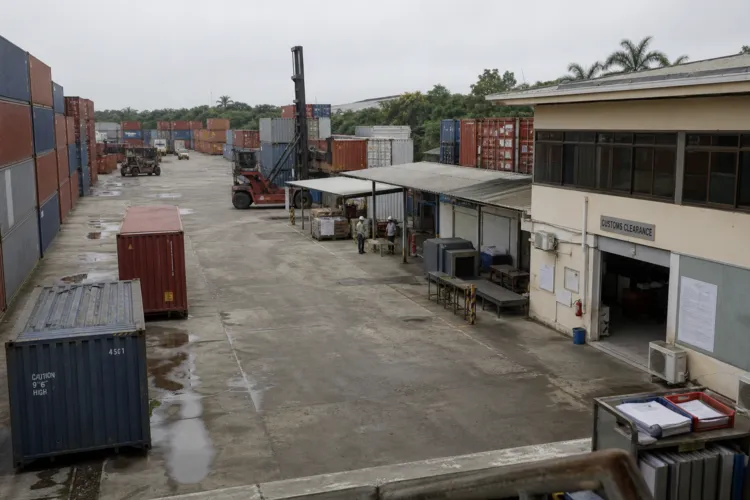
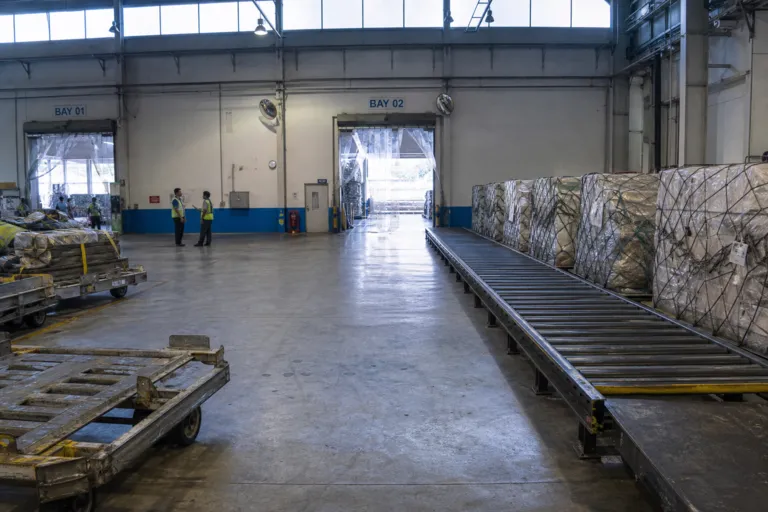
Capacity recovery is not only an airline story in Myanmar. It is also a ground-network and customs story. Ken Research describes a highly fragmented operating landscape, with around 4,000 logistics companies in Myanmar, including 830+ trucking companies and 880+ domestic freight forwarders, concentrated in towns such as Yangon and Mandalay. That fragmentation can make consistent airport-to-warehouse execution harder, especially when shippers run their own trucks due to a weak cargo insurance system (Ken Research). On the enabling side, MarkWide Research highlights customs modernization and cross-border corridor activation, linking improvement to digitization protocols and ASEAN Single Window standardization of documentation between Myanmar, Thailand, and Vietnam. MarkWide also points to bonded warehousing concentration near Thilawa Special Economic Zone as a scale lever for 3PL operators serving garment and agricultural export segments.
Cold-chain and higher-control handling can also shape how much of the recovery shifts toward air. Mordor Intelligence reports non-temperature-controlled facilities held a 91.28% revenue share in 2025, while temperature-controlled capacity is expected to grow at a 3.07% CAGR during 2026–2031. MarkWide similarly frames cold-chain infrastructure as a catalyst, describing agri-commodity exporters contracting temperature-controlled storage capacity for perishables into China and Thailand. These signals matter because airfreight demand often depends on shipment profiles that require reliability and tighter handling windows, so ground-side capabilities can become an indirect capacity constraint even when uplift is available.
Global conditions in 2026 provide context for how capacity may be allocated to or away from smaller markets. DHL Global Forwarding’s air freight update states global air cargo demand grew 9% YoY in June 2026, the strongest YoY increase of 2026, bringing H1 2026 growth to 5% YoY. Yet DHL also reports global air cargo capacity remained flat YoY as of 20 July 2026, and notes disruption effects in specific corridors, including China–Europe freighter capacity falling 12% YoY and MEA capacity staying 4% below last year. These global constraints can tighten the supply of lift and make operational reliability and lane choices more sensitive, which is why Myanmar’s projected faster air-segment growth rates depend on coordinated execution across forwarding, warehousing, and customs processes rather than uplift alone.
What is the 2026 outlook for Myanmar’s freight and logistics sector that supports air cargo recovery?
Which air-related segments show the clearest growth signal for the Myanmar air cargo market?
How concentrated or fragmented is Myanmar’s logistics industry in ways that affect capacity utilization?
What do 2026 global air cargo indicators suggest about capacity availability?