
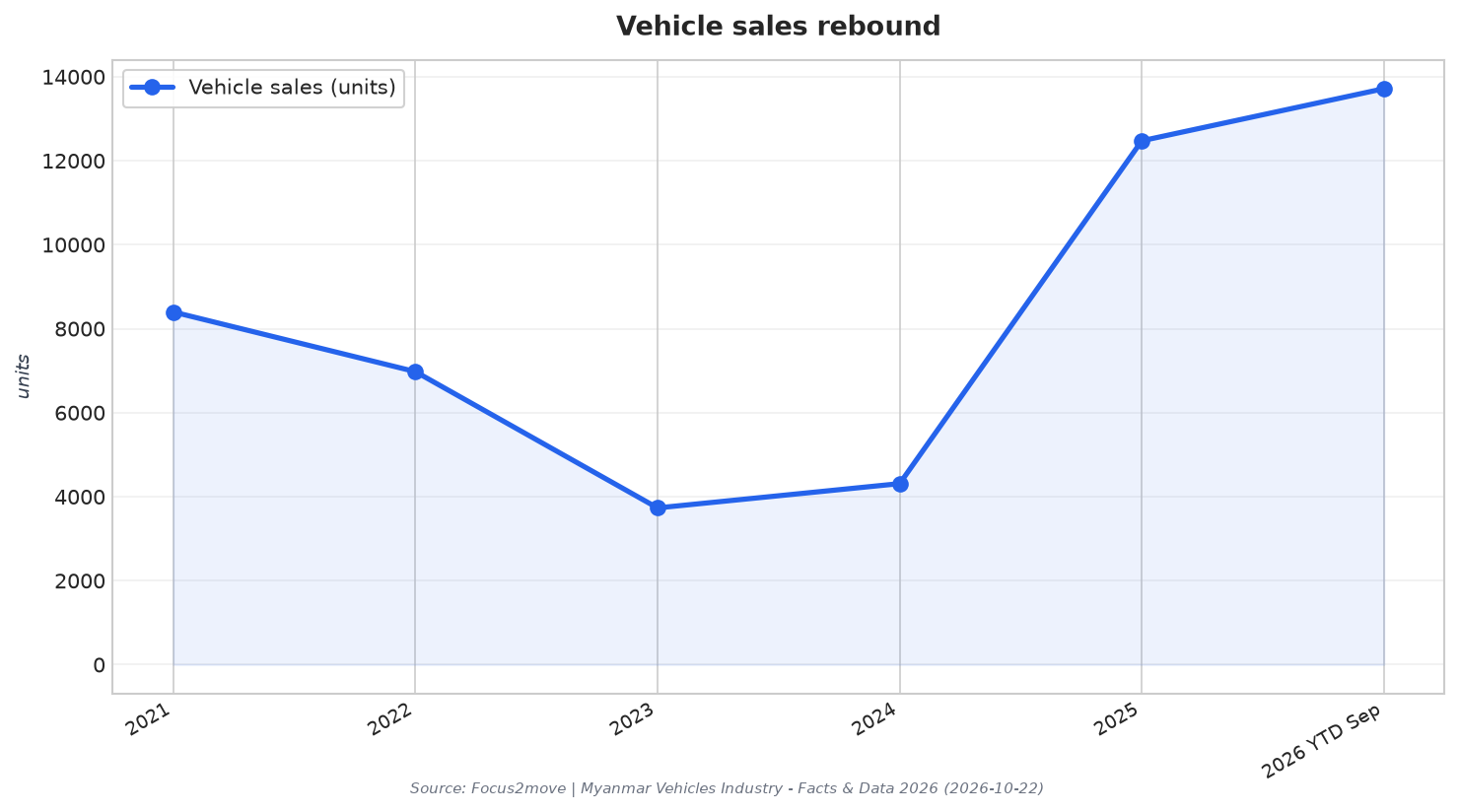
Myanmar’s vehicle industry has already set a stronger tone for 2026, and that matters for truck and bus sentiment even when buyers are navigating tighter operating and financing conditions. Industry volume contracted from 8,398 units in 2021 to 6,977 units in 2022, then fell to a trough of 3,733 units in 2023 before stabilizing at 4,311 units in 2024. The cycle then flipped: sales jumped 189.4% to 12,474 units in 2025. In 2026 YTD September, total volume reached 13,715 units, exceeding the 2025 result by 9.9%, with year-to-date growth described at 83.3% on a larger base.
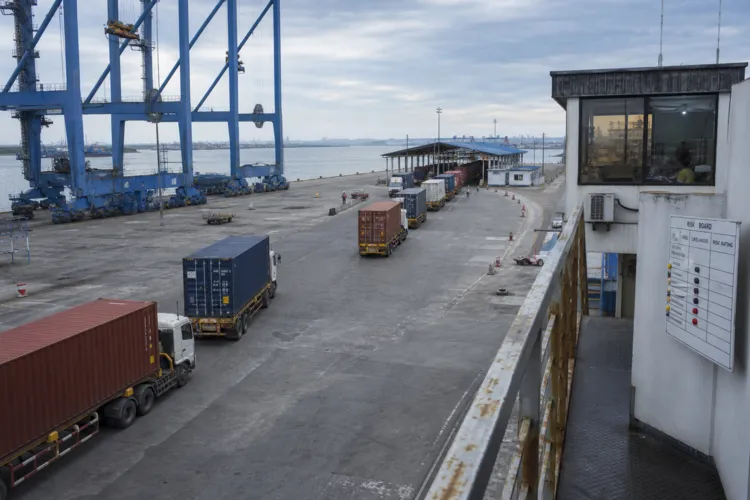
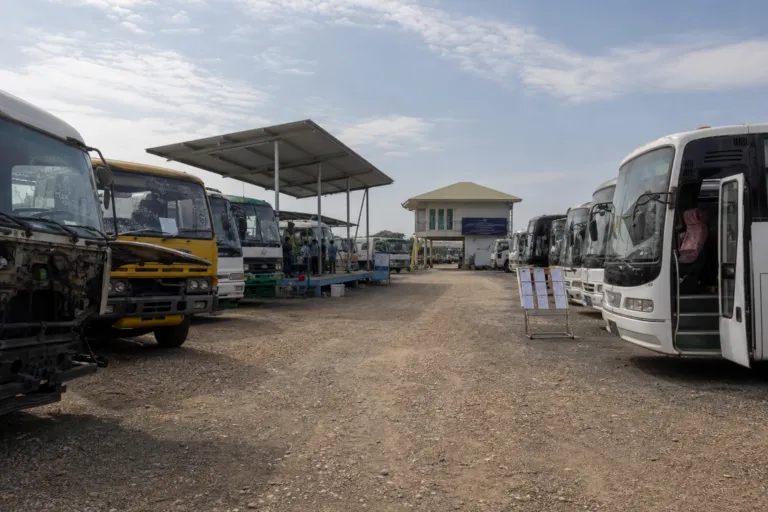
For the Myanmar commercial vehicle market, the truck outlook remains tightly linked to supply access and replacement needs rather than broad fleet expansion. Myanmar’s trucks market is described as overwhelmingly import-led, with an estimated 90–95% of new commercial truck units sourced from China, Japan, Thailand, and South Korea, while domestic activity is limited to light-truck kit assembly and body-building. The base-year demand mix is also specific: light-duty trucks under 6 tonnes GVW are estimated at 55–65% of unit demand, medium-duty trucks at roughly 25–30%, and heavy-duty trucks above 16 tonnes at 10–15%, with heavier segments tied to construction, mining, and port logistics cycles.
What Will Shape 2026 Demand: Imports, Logistics, and Cost Pressures
Several 2026 constraints described in the truck market analysis can directly influence truck and bus deliveries, lead times, and model choice. Import financing is constrained by foreign-exchange scarcity, capital controls, and informal restrictions on letters of credit. These factors can extend import lead times by 4–10 weeks and raise landed costs by 15–30% relative to pre-2021 norms. Fuel price volatility and currency depreciation are also pushing buyers toward smaller displacement and lighter GVW configurations, supporting demand for light-duty trucks and converted pickups relative to heavy-duty units.
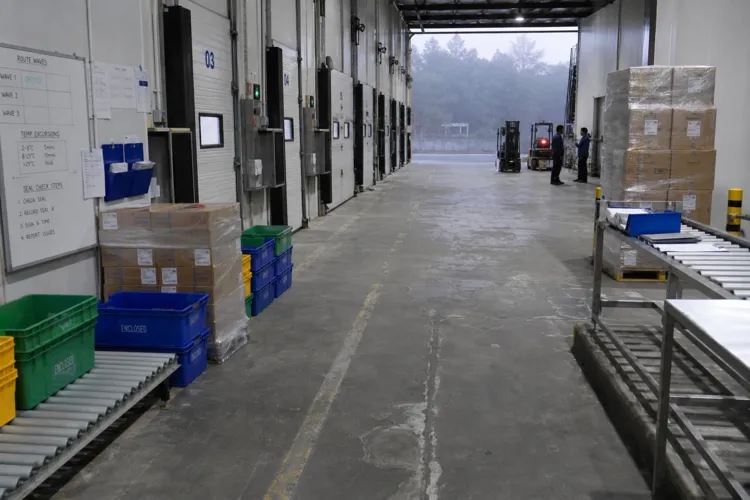
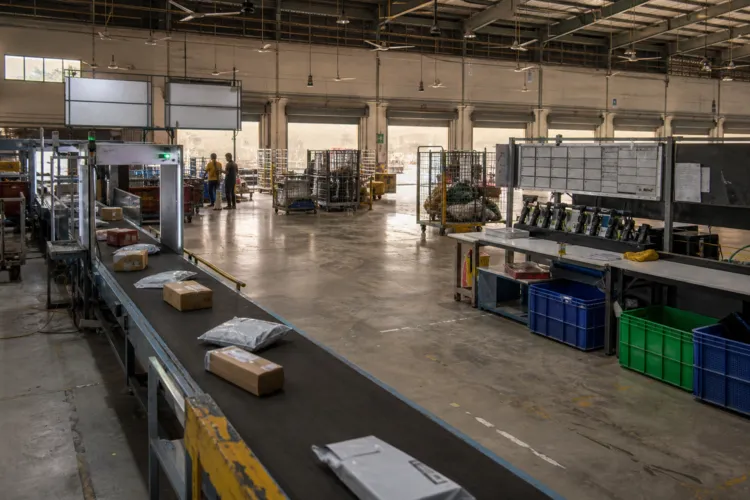
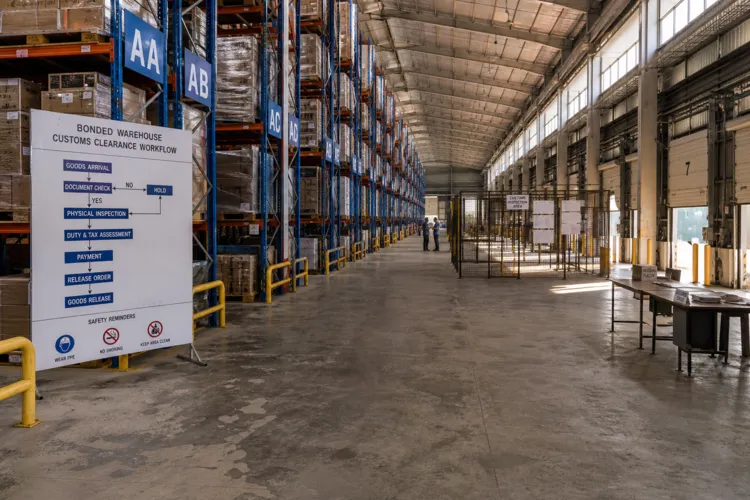
Logistics indicators provide additional context for fleet utilization and renewal. One forecast values Myanmar’s freight and logistics market at USD 6.35 billion in 2026 and projects a 3.21% CAGR to USD 7.43 billion by 2031. It also notes that road-use charging changed on April 1, 2026, when electric vehicles were brought under road and bridge toll requirements after an exemption period ended. In parallel, road freight is described as the dominant mode for domestic tonnage moved, while technology investment priorities include Track & Trace, and automated warehousing is identified as the fastest-growing technology segment, albeit constrained beyond Yangon and Mandalay by electricity reliability gaps.
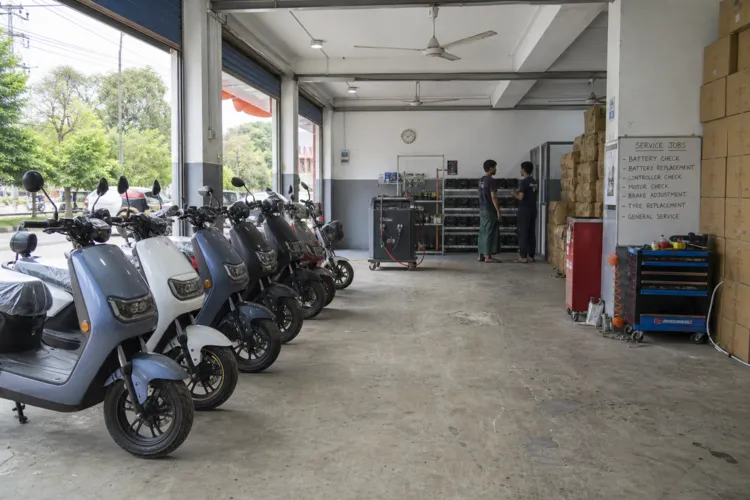
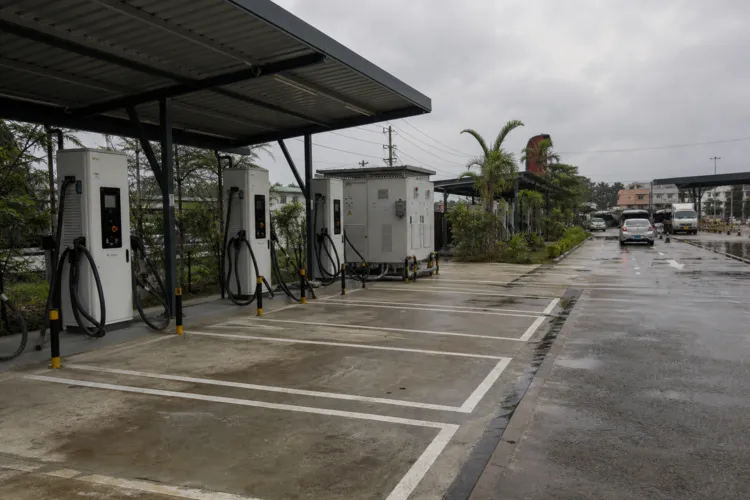
Bus and truck electrification dynamics should be read carefully across sources. In the broader vehicle industry, BEV/PHEV vehicles are stated to hold 68.2% of total industry sales in 2026, up 18.5 points in a year, with the segment growing nearly twice as fast as the overall market. However, the truck-focused view is different: electric trucks are described as well under 2% of new sales in the 2026 base year, with adoption constrained by charging infrastructure gaps, high upfront cost, and unreliable grid supply. That gap implies that 2026 truck and bus sales momentum may rely more on conventional replacement cycles than on rapid electrified commercial fleet turnover.
What is the 2026 signal for overall vehicle demand in Myanmar?
How import-dependent is Myanmar’s truck market in 2026?
What mix of trucks dominates demand in 2026?
What is a key risk factor for the Myanmar commercial vehicle market in 2026?
How large is Myanmar’s freight and logistics market in 2026, and why does it matter?