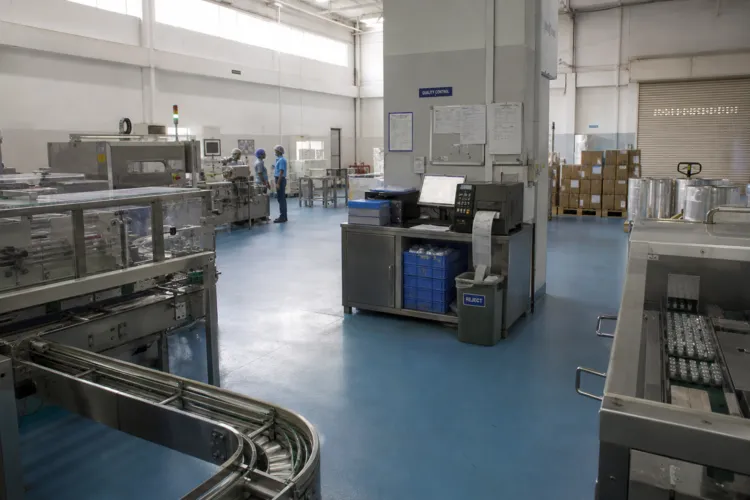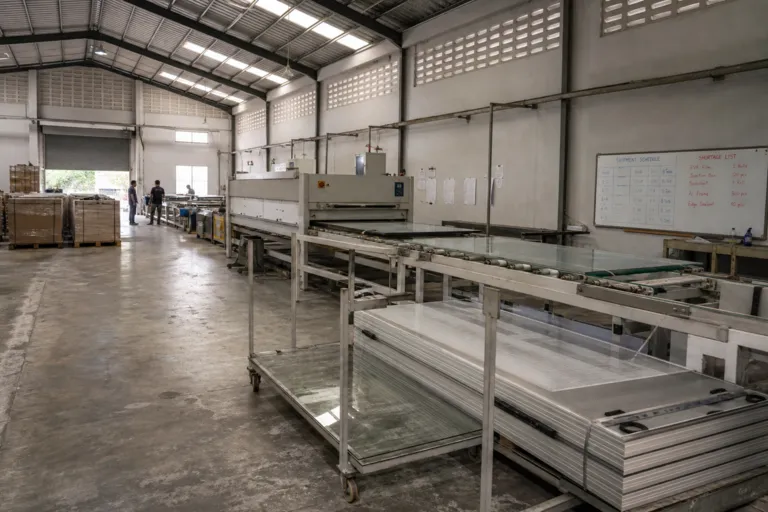
In 2026, Myanmar’s solar supply story sits between urgent demand growth and a hard reality: the market remains almost entirely import-dependent. A 2026 market report on solar cells and LEDs says domestic manufacturing is limited to small-scale assembly of LED luminaires and local production of solar mounting or balance-of-system components. It adds that imported cells, modules, chips, and finished lamps account for the overwhelming majority of available supply. That structure leaves project delivery exposed to border logistics, foreign-exchange access, and supplier-country pricing, while distributors and local assemblers face margin pressure from low-cost imports.
Demand pressure is not theoretical. Reuters reports that household solar installations surged from a few hundred in 2019 to roughly 300,000 in 2025 as users switched from diesel generators to solar panels with storage. Reuters also describes small solar systems spreading across shops, restaurants, workshops, water kiosks, clinics, and schools that need reliable power for lighting, refrigeration, and electronic payments. In the wider power system, Wikipedia’s overview cited in Myanmar electricity analysis says electrification was 50% in 2019, and that as of 2023 only 73.7% of the population had access to at least 4 hours of electricity per day. These constraints keep pulling solar demand forward even when financing and imports tighten.
Why Local Production Is Discussed, but Imports Still Set the Pace
The push for local output is closely linked to energy-security narratives and practical import frictions, not just industrial policy ambition. Myanmar electricity market analysis summarizing Mizzima reporting says energy self-sufficiency is placed at the centre of economic strategy. Yet the solar cells and LEDs market report emphasizes recurring foreign-exchange scarcity and import-licensing friction that disrupt supply, raise landed costs, and lengthen lead times, sometimes delaying projects by quarters rather than weeks. It notes that importers often carry elevated inventory buffers, tying up working capital and increasing effective unit costs. In this environment, local activity tends to concentrate where it is feasible—assembly and balance-of-system components—rather than full upstream cell or module manufacturing.
Grid and fuel dynamics reinforce this import-led buildout. Wikipedia’s power-mix figures, cited in the 2026 electricity analysis, show that in May 2020 total installed capacity was 6034 MW, including 3262 MW of hydropower (54%) and 2496 MW of natural gas (41%). The same analysis cites Reuters referencing a World Bank June 2024 report saying output dropped largely due to a shortage of natural gas, as domestic production declined and the government halted imports of liquefied natural gas due to a foreign-exchange shortage. Meanwhile, Myanmar Energy Consulting’s 2026 outlook describes solar as gaining the fastest traction as module costs decline and irradiation data improves, with demand tied to industrial electrification needs and captive power solutions in manufacturing clusters.
For investors and developers tracking the Myanmar solar panel manufacturing market, the near-term story is less about replacing imports overnight and more about building reliable delivery around an import-dominated hardware stack. The solar cells and LEDs report says distribution is consolidating around a small number of Yangon-based importers and wholesalers, while cross-border trade via land routes complements seaborne imports from China, Thailand, and Vietnam. On the demand side, the renewable energy outlook guide cites Wikipedia stating Myanmar has potential to generate 51,973.8 TWh/year with an average of over 5 sun hours per day, and that 70% of the population live in rural areas where photovoltaics are used for charging batteries and pumping water. In practice, 2026 momentum favors firms that can manage financing bottlenecks, ensure after-sales support, and compete on quality in a market where unbranded product variance can undermine confidence.
How import-dependent is Myanmar’s solar and LED supply chain in 2026?
What is driving solar demand growth in Myanmar ahead of 2026?
Why is local solar production discussed as part of energy self-sufficiency?
What power-system constraints make distributed solar attractive in Myanmar?
What should buyers and developers watch in the Myanmar solar panel manufacturing market?