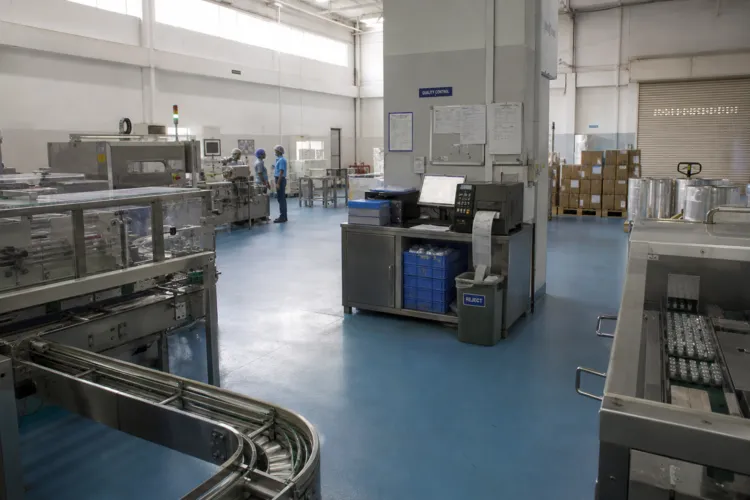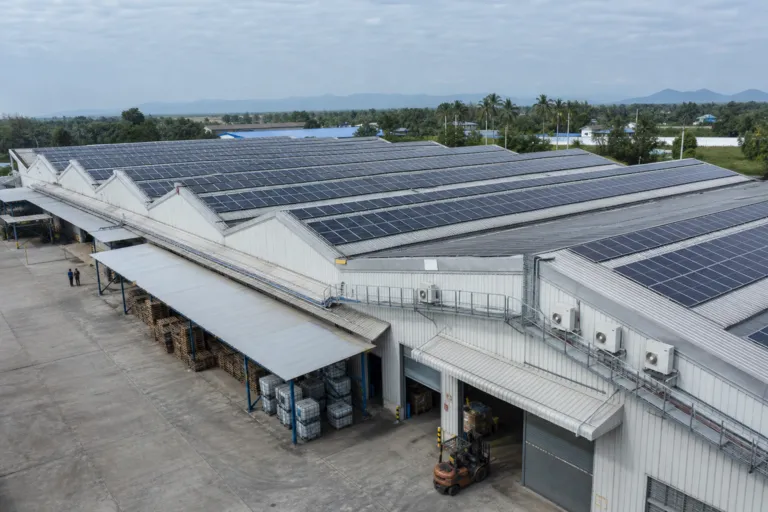
Rooftop solar for factories in Myanmar is being pulled forward by simple economics and operational reality. A World Bank assessment cited by REGlobal reports that monthly average diesel prices rose by nearly 900% in nominal terms, from MMK 682 per liter in January 2021 to MMK 6,057 per liter in April 2026. In the same period, industrial grid tariffs increased by 80% in February 2026. Against that backdrop, the report puts the cost of energy from large commercial and industrial solar-plus-battery systems at US$0.205 per kWh, which is cheaper than the industrial grid tariff of US$0.250 per kWh. For factories that need predictable output, this gap matters as much as headline project pricing.
Adoption is also moving from “pilot” to repeatable deployment. The World Bank assessment notes that the C&I segment is approaching commercial viability and is likely to keep growing largely on commercial terms. It estimates that approximately 110 to 170 new C&I projects are delivered every year, and that payback periods have shortened to one to three years. It also identifies at least seven commercial power purchase agreement (PPA) projects to date, signaling that service-based procurement is emerging alongside direct ownership. For factory decision-makers, these datapoints help frame rooftop PV less as a one-off engineering project and more as an energy sourcing choice.
What’s Holding Factory Rooftop Solar Back in 2026
The binding constraint is not demand, but financing. The same World Bank assessment states that liquidity exists in Myanmar’s financial system but is not deployed in solar, and that the absence of viable financing channels is the key brake on market growth. It adds that commercial banks mandate collateral requirements of 100% to 200% of loan value and lack technical frameworks to assess solar-specific risk. For factories, that combination can turn a short payback on paper into a project that stalls at credit approval. It also influences system design choices, including how quickly firms can add batteries or expand system size.
Supply-side structure adds another layer of execution risk. An IndexBox market overview finds that Myanmar’s combined solar cell and LED market remains almost entirely import-dependent, with domestic manufacturing limited to small-scale assembly of LED luminaires and some solar mounting or balance-of-system components. It warns that imported cells, modules, chips, and finished lamps account for the overwhelming majority of supply, leaving the market exposed to border logistics, foreign-exchange access, and supplier-country pricing. It also flags foreign-exchange scarcity and import-licensing friction as factors that can delay projects “by quarters rather than weeks.” For the Myanmar commercial and industrial solar market, these frictions can be the difference between hitting a production season and missing it.
Equipment targeting factory needs is becoming more visible, especially around larger inverters. A Myanmar-focused inverter market snapshot describes large-scale inverters in the 10 kW to 160 kW range being positioned for factories to offset a reported 140% increase in industrial electricity costs, and says businesses are shifting from diesel generators to solar to reduce operating costs. The same snapshot highlights a common commercial preference: the ability to run without a battery initially to save cost, while keeping the option for future expansion. Meanwhile, market-organization signals are appearing: a 2026 outlook guide notes that Tracxn lists 12 active solar energy companies in Myanmar as of May 2026, with four having received funding, suggesting a growing base of providers competing to serve industrial rooftops.
Why are Myanmar factories considering rooftop solar in 2026?
How fast is the commercial and industrial segment adding projects?
What is the main constraint on growth in the Myanmar commercial and industrial solar market?
How does import dependence affect factory rooftop solar delivery timelines?
Are service-based models like PPAs appearing for factory solar projects?